A properly installed, well-maintained furnace is a safe way to heat a home. The risk starts when something goes wrong: a cracked heat exchanger, a blocked or disconnected vent, a poor gas-line connection. Carbon monoxide (CO) then ends up in your living space, and you cannot see, smell or taste it. The protection is simple and cheap: a certified CO alarm outside the bedrooms, a professional inspection every year, clear vents, and a plan for what to do when the alarm sounds. This guide covers each one, written for Canadian homes and Canadian winters.
TL;DR
- CO is produced whenever fuel burns, so furnaces, gas dryers, fireplaces and gas stoves can all be sources. A furnace becomes a hazard when it leaks, vents poorly or is badly maintained.
- Early symptoms look like the flu without a fever: headache, fatigue, dizziness, nausea. If several people in the house feel it at once, suspect CO.
- If an alarm sounds, leave immediately, do not hunt for the source, and call 9-1-1 or your fire department from outside.
- Install a CSA 6.19 certified alarm in the hallway outside sleeping areas, test it regularly and replace it before it expires.
- Have a professional inspect fuel-burning appliances at least once a year, and keep exhaust vents and chimneys clear of snow, ice and debris.
Table of Contents
- How a furnace ends up producing a carbon monoxide problem
- Carbon monoxide symptoms from a furnace: what they feel like
- What to do when the alarm sounds
- Carbon monoxide alarms: which, where and how to test
- A furnace safety checklist for Canadian homes
- Where cleaning fits, and where a licensed technician comes in
- Book the fall furnace and vent visit with us
- Frequently asked questions
- Sources
How a furnace ends up producing a carbon monoxide problem
Health Canada describes carbon monoxide as an invisible, odourless and colourless gas produced when any type of fuel is burned, including natural gas, propane, oil, wood, coal, butane and gasoline. In a house, that means more than the furnace. The fuel-burning appliances Health Canada lists include dryers, furnaces, fireplaces, and wood-burning or gas stoves.
A furnace is designed to send its combustion gases safely outside through a vent or chimney. CO becomes a household problem when that system fails. The conditions Health Canada tells homeowners to check for are leaks, cracks, blocked vents, improper installations, poor gas-line connections, and corroded or disconnected vent pipes.
In practice, that looks like a few familiar situations:
- A vent pipe that has come loose or rusted through, so exhaust gas escapes into the basement or utility room instead of outdoors.
- A blocked flue or chimney, from debris, a nest, or in a Canadian winter, snow and ice over an exterior exhaust.
- Combustion gas spillage, where exhaust flows back into the home rather than up and out. Natural Resources Canada has a useful page on combustion spillage and what causes it.
- Missing furnace panels or grills, or a fan compartment door that is not secure. The Technical Safety Authority of Saskatchewan advises keeping panels and grills in place and the fan compartment door closed.
None of these announce themselves. That is why the rest of this guide leans on alarms and scheduled inspections rather than on noticing a problem by eye.
Carbon monoxide symptoms from a furnace: what they feel like
The difficult part of CO poisoning is that it feels ordinary. The Public Health Agency of Canada’s surveillance data notes that early symptoms of mild to moderate poisoning can mimic the flu or food poisoning, but without a fever. They include:
- Headache
- Fatigue
- Dizziness
- Nausea
- Shortness of breath
How fast can symptoms start?
It depends on the concentration. Cleveland Clinic notes that in high concentrations, poisoning can occur in fewer than five minutes, while at lower concentrations it can take one to two hours. A slow leak from a furnace in the middle of winter is the lower-concentration case: you may feel progressively worse over an evening or a few days, then better when you leave the house for work or school.
Clues that point to the house, not a bug
- More than one person is affected. Health Canada’s data advises being attentive to symptoms, particularly when multiple household members have similar ones. Pets count as household members too.
- Symptoms ease when you leave and return when you come home.
- Repeated headaches are one of the signs Natural Resources Canada lists, along with combustion odours, hot and muggy air around heating equipment, and soot stains.
- No warning at high levels. The US Consumer Product Safety Commission notes that victims of rapidly developing, high-level exposure can become confused and lose muscle control without first feeling milder symptoms. A person may not be able to get themselves out, which is why a working alarm matters more than your own judgement.
If you feel unwell and suspect CO, treat it as an emergency: get outside into fresh air first, then call for help. Anyone with ongoing symptoms should see a doctor or call 9-1-1 and say CO exposure is possible.
What to do when the alarm sounds
Health Canada’s instructions are short, and worth memorizing or posting near the alarm:
- Leave the home immediately and move to fresh air.
- Do not try to find the source. Shutting off the furnace or opening windows while you search wastes the minutes that matter.
- Once outside, call 9-1-1, your local fire department or emergency services.
- Do not go back in until a professional has fixed the problem.
Make sure every person and pet is out and accounted for before you call. If the alarm stops after you leave, do not take that as proof the air is clear. The cause still needs to be found and fixed by a qualified technician before anyone sleeps in the house again.
It also helps to rehearse it. In a house with children, agree on a meeting spot outside (the mailbox, the neighbour’s driveway) so nobody goes back in to look for someone who is already out.
Carbon monoxide alarms: which, where and how to test
Choose a certified alarm
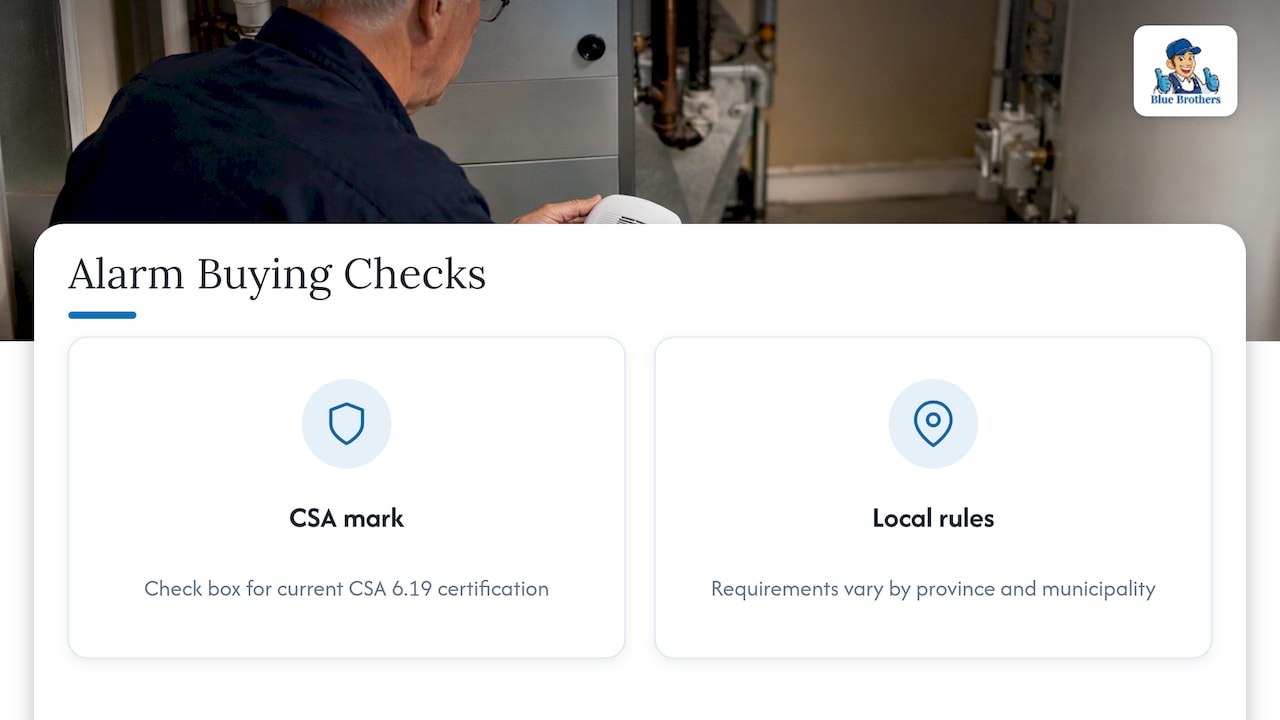
Natural Resources Canada says to buy an alarm certified to the current CSA 6.19 Residential Carbon Monoxide Alarming Devices Standard. Look for the certification mark on the box before you buy. Alarm requirements for homes can differ by province and municipality, so check your local building and fire rules if you rent out a property or have just bought one.
Where to put them
Health Canada says the most important place for an alarm is in a hallway outside sleeping areas, because that is where it can wake you. For a typical Canadian house, a sensible layout adds to that:
- One outside the bedrooms on each level that has them.
- One on the main floor and one on the basement level, where the furnace usually lives, so a problem there is caught early rather than after the gas has travelled upstairs.
- Follow the manufacturer’s placement guidance for distance from the furnace, fuel-burning appliances and bathrooms, since steam and fumes can trigger nuisance alarms.
So, should you have an alarm near the furnace? Yes, on the same level, as the manufacturer directs, and always in addition to the hallway alarm, never instead of it.
Test it, and watch the expiry date
Health Canada advises testing alarms regularly, replacing batteries and the alarm itself as the manufacturer recommends, and checking the expiry date. To test, press and hold the test button until it sounds; your manual will say how long. A few habits make it stick:
- Test on the same day you check your smoke alarms.
- Change batteries on a fixed date each year (many people use the fall clock change, just before the heating season peaks).
- Write the expiry date on the alarm with a marker, or in your phone calendar, when you install it.
- Replace any alarm that has passed its expiry, even if it still seems to work.
A furnace safety checklist for Canadian homes
Health Canada’s guidance and the Technical Safety Authority of Saskatchewan point to the same core routine. Use it as a seasonal checklist.
Before the heating season
- Book a professional inspection. Health Canada recommends a professional inspect fuel-burning appliances at least once a year, or as the manufacturer’s instructions say. Fall is the natural time, before the first cold snap.
- Check vent pipes. They should be in good condition and securely fastened, with no corrosion or separated joints.
- Confirm panels are on. Furnace panels and grills in place, fan compartment door secure.
- Test every CO alarm and replace batteries or any expired unit.
- Clear the area around the furnace. Do not use the furnace room for storage, and keep the space around gas appliances open for airflow.
During the winter
- Keep exhaust vents and chimneys clear of snow, ice and debris. After a heavy snowfall or freezing rain, walk outside and check any side-wall vents on the house.
- Watch for warning signs: repeated headaches, combustion odours, hot and muggy air near heating equipment, soot stains.
- Never idle a vehicle in an attached garage, even with the door open.
- Never run gas-powered equipment in a garage or shed, and never burn fuel, charcoal or wood-burning equipment designed for outdoors inside the house. This matters most during winter power outages, when people reach for generators and camp heaters.
Everything the furnace shares with other appliances
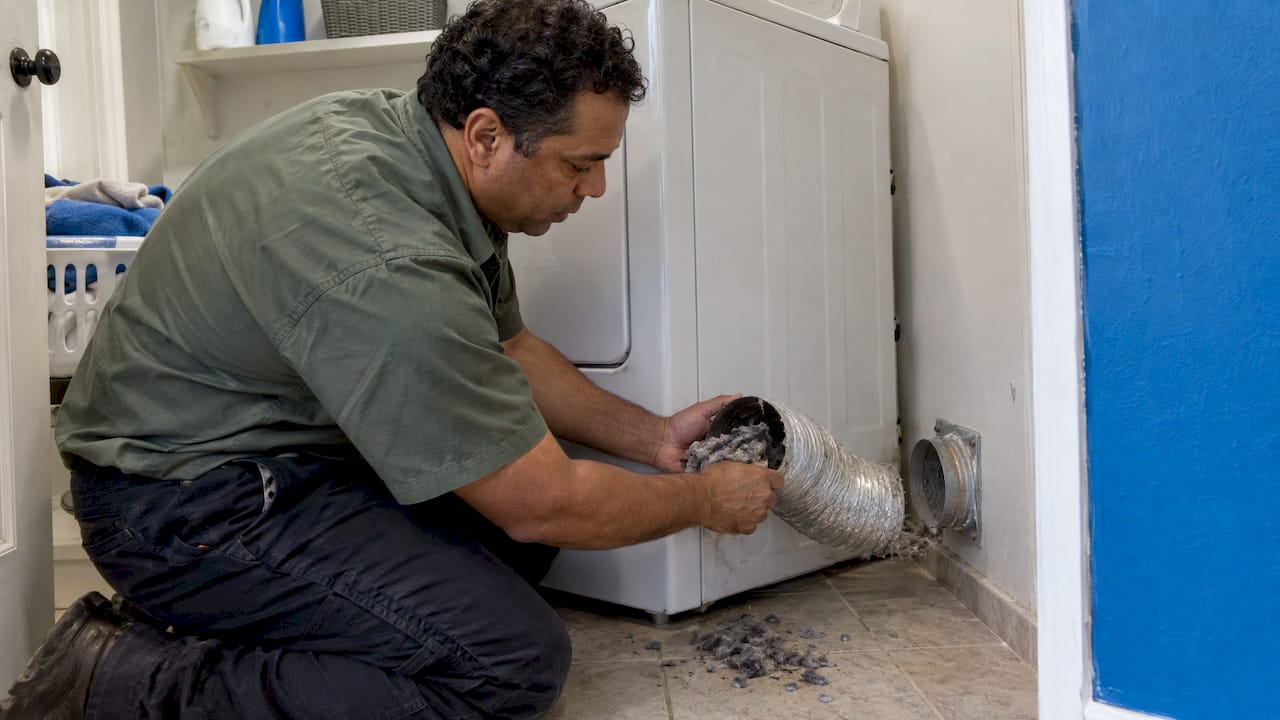
CO from your furnace is only part of the picture. A gas dryer is a fuel-burning appliance too, and its exhaust vent runs through the same walls and the same winter weather. A lint-clogged vent is a fire risk and a ventilation problem. If your home has a gas dryer, put dryer vent cleaning on the same fall list.
Where cleaning fits, and where a licensed technician comes in
It helps to be clear about who does what. A furnace cleaning removes dust and debris from the furnace so it runs cleanly and breathes properly. Our own article on fire hazards and a clean HVAC system goes through why that matters in winter. Cleaning is part of a good maintenance routine, and a technician who is in your furnace can spot a loose panel, rusted vent or sooty residue worth flagging.
Anything that touches combustion, gas connections, heat exchangers or vent repairs belongs with a qualified technician, and often a licensed gas fitter, as Health Canada’s advice to have appliances professionally inspected makes clear. If you have been weighing whether an older unit is worth repairing, our repair or replace guide with the 30% rule lays out the numbers. If you are replacing it, it is also a good time to compare gas and electric furnaces, or to read how a heat pump compares with a furnace for a larger or commercial space, since a heating system with no combustion has no combustion gases.
Perspective
We clean furnaces, ducts and dryer vents across BC, Alberta and Saskatchewan, and we are inside a lot of mechanical rooms in November. What we notice is that carbon monoxide safety usually fails for a boring reason: nobody looked. The alarm battery was never changed, the vent pipe was never checked, the furnace had not been touched in years.
That is why we treat a cleaning visit as a chance to look, not just to vacuum. A clean, accessible furnace and a clear dryer vent are easier to inspect and easier to keep safe, and our technicians work with certified equipment and safety protocols so that nothing gets left worse than we found it. We pair that with clear pricing and round-the-clock support, including emergencies, because a heating problem in a Prairie January does not wait for business hours.
Our advice is the same one we give neighbours: get the alarm, get the yearly professional check, and put your vent and furnace cleaning on the same calendar date every fall.
Jayce
Book the fall furnace and vent visit with us
If the checklist above made you realize your furnace or dryer vent has not been looked at in a while, we can help. Our furnace cleaning is listed at $50 to $300 CAD per service, and dryer vent cleaning at $99 to $225 CAD. If your ducts are also due, air duct cleaning runs $400 to $800 CAD. We work in homes, strata buildings and commercial properties in British Columbia, Alberta and Saskatchewan.
To see everything we offer for homes, start at our residential services page, or request a quote through bluebrothers.ca. Property managers can look at our strata furnace cleaning service.
Frequently asked questions
Should I have a carbon monoxide detector near my furnace?
Yes, in addition to the alarm in the hallway outside the bedrooms, which Health Canada says is the most important location. Put one on the same level as the furnace, following the placement instructions of your alarm’s manufacturer. Choose an alarm certified to CSA 6.19.
How long does it take for carbon monoxide symptoms to start?
It depends on how much gas is in the air. At high concentrations, poisoning can occur in under five minutes, and at lower concentrations it can take one to two hours, according to Cleveland Clinic. A slow furnace leak can cause headaches and tiredness that build over days, so pay attention if more than one person in the home feels unwell.
What is the most common source of carbon monoxide in a house?
Any appliance that burns fuel can produce it. Health Canada lists dryers, furnaces, fireplaces, and wood-burning or gas stoves, and warns against running vehicles or gas-powered equipment in an attached garage. With a furnace, the danger comes from leaks, cracks, blocked vents or corroded vent pipes.
How often should my furnace be inspected?
Health Canada recommends a professional inspect fuel-burning appliances at least once a year, or according to the manufacturer’s instructions. Fall, before the heating season is in full swing, is the practical time to do it.
What should I do if my alarm goes off but I feel fine?
Leave the house anyway and call 9-1-1 or your fire department from outside. Do not try to find the source, and do not go back in until a professional has fixed the problem. Feeling fine is not proof the air is safe, because high-level exposure can cause confusion without milder warning symptoms first.
Sources
- Carbon monoxide: Overview, Health Canada
- Carbon monoxide: Preventing exposure, Health Canada
- Poisonings and injuries related to carbon monoxide exposure, Health Infobase
- Carbon Monoxide Poisoning Symptoms, Cleveland Clinic
- Carbon Monoxide Questions and Answers, CPSC
- Combustion Gases in Your Home, Natural Resources Canada
- Carbon Monoxide Safety, Technical Safety Authority of Saskatchewan
- Heat pump vs furnace for commercial space, Multigroup Contracting