For most Canadian homes, the answer is twice a year for the outside of your windows, in spring and fall, and every month or so for the inside, or whenever the glass is smudged. Homes beside busy roads, construction, water or heavy tree cover usually need three or four exterior cleanings. This guide explains where those numbers come from, how to adjust them for your house, and when to clean.
TL;DR
- Exterior glass: a thorough cleaning twice a year, spring and fall, is the standard baseline for most Canadian homes.
- Interior glass: monthly or as needed, and more often in winter when condensation leaves a film.
- Move to three or four exterior cleanings a year if you live near traffic, construction, water or large trees.
- Pick a mild, overcast day above freezing, out of direct sun and strong wind.
- Hard water spots and baked-on residue are the sign you waited too long. Early cleaning is cheaper than restoration.
Table of Contents
- The short answer: twice a year, with adjustments
- What changes the number for your home
- Inside versus outside
- A schedule you can follow
- The best time of year and day to clean
- Common mistakes that shorten the life of your glass
- Our perspective
- When to hire a professional
- FAQ
- Sources
The short answer: twice a year, with adjustments
The glass industry’s own guidance is a good place to start. The National Glass Association and the International Window Cleaning Association say twice-yearly cleaning is generally sufficient, though some regions need more. They also say frequency should follow site conditions and the severity of local environmental factors and pollutants, and that glass should be cleaned as dirt and residue appear.
That last point matters. A schedule is a default, not a rule. If you can see a film, spots or streaks from across the lawn, the schedule has already slipped.
Here is how the main sources line up:
| Source | Exterior | Interior |
|---|---|---|
| Andersen | Twice yearly: fall for summer debris, spring for winter road salt | Not specified |
| Marvin | Once or twice yearly, depending on dirt, tree sap and bird droppings | Not specified |
| This Old House | Twice yearly, up to three times with heavy tree cover, traffic, construction or pollution | Monthly or whenever smudged |
| HomeStars (2026 price guide) | Twice yearly for most Canadian homes, three or four times near busy roads, construction sites or water | Not specified |
The pattern is consistent: two cleanings is the floor for most houses, and the environment pushes it up.
What changes the number for your home
Traffic, construction and dust
Road dust, exhaust film and construction dust settle on glass all year. HomeStars notes that homes near busy roads or construction sites may benefit from three or four cleanings annually. If your street is being paved or a neighbouring lot is being built, expect the glass to look dull within weeks.
Trees, sap and birds
Marvin lists tree sap and bird droppings as reasons to clean more often. Both bond to glass as they dry, and sap in particular gets harder to remove each week. If you have mature trees over a window, add a mid-summer exterior clean.
Water, sprinklers and mineral deposits
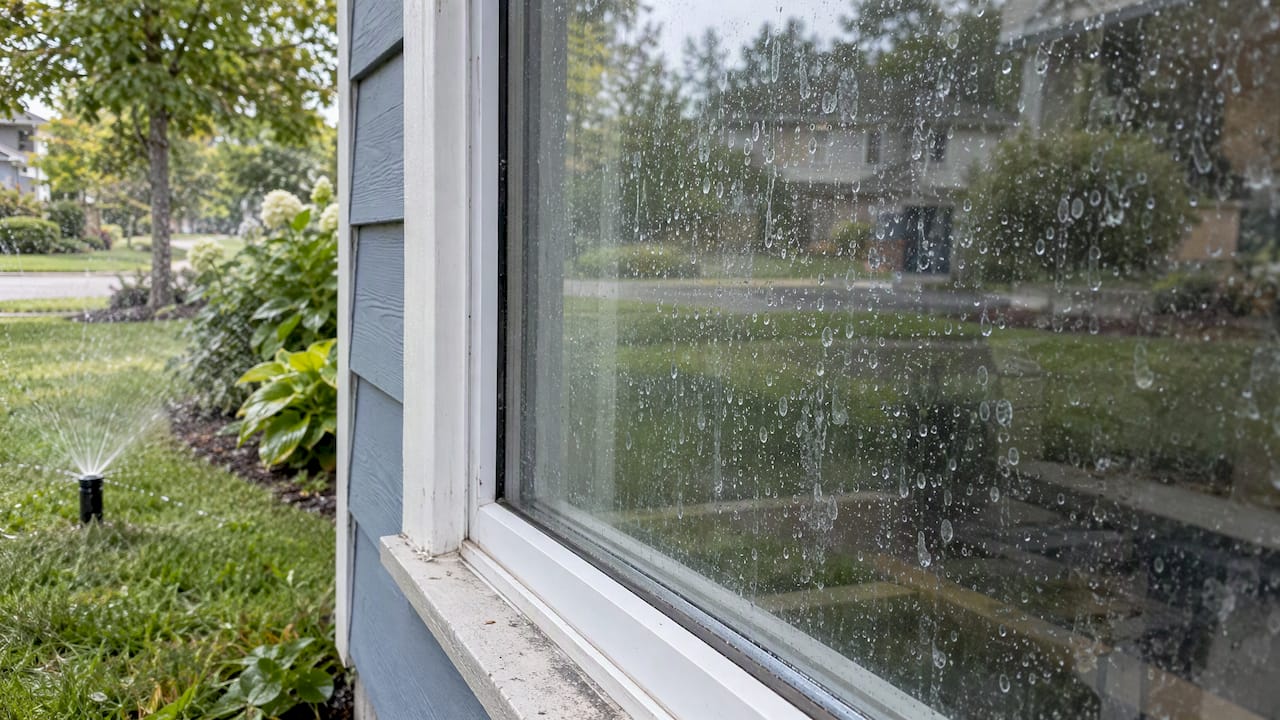
Water is not always the friend of clean glass. Pilkington’s technical guidance warns that hard-water deposits from washing, rinsing or lawn sprinklers can be difficult or impossible to remove without excessive polishing. The advice is to stop mineral deposits drying on the glass in the first place.
If a sprinkler hits your windows, or you live on well water, check those panes more often. Once the spots turn cloudy and no longer wipe off, read when to call a pro for hard water stains on windows in Canada.
Winter road salt and spring grime
Andersen points to winter road salt as the main thing to remove in spring. In the Prairies and much of Canada, that salt travels as spray and dust and lands on ground-floor glass in particular. A spring clean is less about looks than about not letting it sit through the first hot weeks.
Wildfire smoke and pollen
Smoke residue and pollen are part of the fall-clean argument in western Canada, but be careful about when you open things up. Health Canada’s Healthy Home Guide advises keeping windows closed when outdoor air quality is poor, including during wildfires or extreme heat. Wait for the air to clear before you wash, and keep the glass shut meanwhile.
Inside versus outside
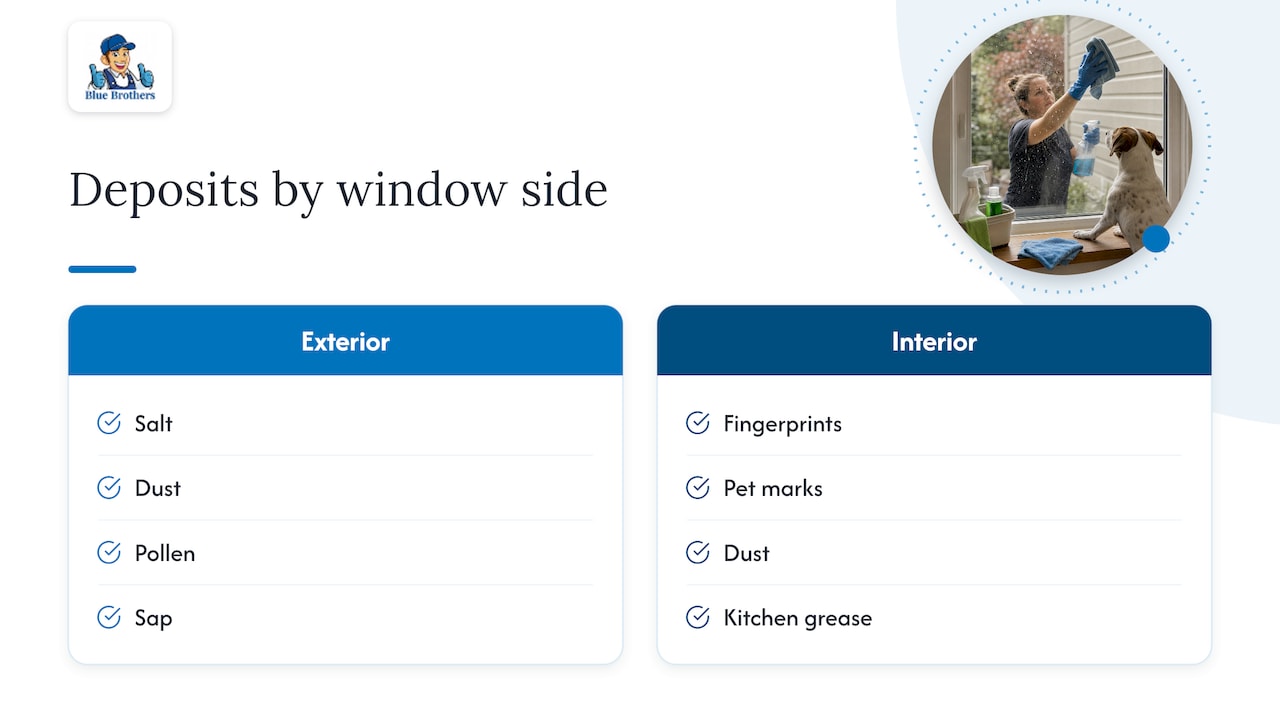
The outside of a window collects environmental deposits: salt, dust, pollen, sap, bird droppings and mineral spots. The inside collects a different set: fingerprints, pet marks, dust, kitchen grease and condensation residue.
This Old House puts interior cleaning at about monthly or whenever the glass is smudged. That is a sensible rhythm for the windows you look through every day, like the kitchen, the living room and the kids’ rooms. Bedrooms and spare rooms can go longer.
Winter changes the interior picture. The National Research Council of Canada notes that condensation commonly forms on interior window surfaces in winter, and that excessive condensation means you should reduce moisture sources or increase ventilation. If you are wiping water off the glass every morning, cleaning more often will not fix it. The problem is humidity. For more on what persistent moisture between panes means, see these fixes for foggy double pane windows.
While you are checking glass, look at the frames too. The Canada Mortgage and Housing Corporation’s home maintenance guide treats windows as part of exterior upkeep, including checking for cracks around doors and windows. It does not set a washing interval, but a seasonal wash is the natural moment to look.
A schedule you can follow
Here is a practical year for a typical Canadian house. Adjust the months for your region.
| When | What to do |
|---|---|
| Spring, once the weather stays above freezing | Full exterior and interior clean. Remove winter salt and grime, and check frames and seals. |
| Early summer (optional) | Exterior only for homes with trees, sprinklers, traffic or construction nearby. HomeStars describes summer exterior-only cleaning as an option between combined spring or fall visits. |
| Fall, before the hard freeze | Full clean to remove summer dust and debris. Andersen recommends fall for this reason. |
| Winter | Interior wipe-downs as needed. Exterior only on a mild day. |
| Monthly | Interior glass you touch and look through most. |
If you have a third storey, large picture windows or hard-to-reach glass, this is where hiring out makes sense. You can book our window cleaning services in BC, Alberta and Saskatchewan on the same seasonal rhythm.
The best time of year and day to clean
Which month
The widely repeated advice is spring and fall. The Spruce reports that professionals commonly recommend spring and fall cleaning, with extra as-needed cleaning for homes exposed to heavy traffic, rain, pollen or debris. Marvin adds that spring and fall are especially suitable in colder climates.
A Canadian new-home care guide recommends moderate temperatures such as spring or fall for the job. The reason is practical: cleaning solution and rinse water should not freeze on the glass, and you do not want it drying instantly in heat.
Exactly which month depends on where you live:
- Coastal BC: the main wet season ends earlier in spring, so you can clean sooner, and fall cleaning works best before the rain returns.
- Alberta and Saskatchewan: wait until nights stop dropping below freezing, which often means late April or May. For fall, aim for September or October before the first hard frost.
- Anywhere: the day matters as much as the month. If the forecast shows frost, rain or high wind, move the job.
There is no single best month for the whole country. If you keep to “after the last freeze” and “before the first one”, you will be close enough.
For a wider look at what to do around the house each season, these seasonal home maintenance tips are a good checklist to pair with your window schedule.
Which day and hour
Marvin advises cleaning in shade or on cloudy days, because direct sun dries the solution quickly and can cause streaking or spotting. The glass industry guidance adds that tinted or reflective glass should be kept out of direct sunlight while cleaning, because the surface temperature can climb too high. It also says to check the wind so solution is not blown onto glass you have just finished.
In short, pick an overcast morning, mild and calm, and work one window at a time.
Common mistakes that shorten the life of your glass
The glass industry guidance lists the mistakes professionals see most: cleaning tinted or reflective glass in direct sun, leaving water or cleaning solution on the glass, and using abrasive tools or razor blades for routine cleaning. Remove solution promptly with a squeegee rather than letting it dry.
Two more worth adding:
- Mixing products. Transport Canada’s CANUTEC warns that mixing bleach with ammonia-based cleaners, including some glass cleaners, produces harmful chloramine vapours. Never mix products, ventilate the room, wear gloves and eye protection, and keep cleaners in their labelled containers. If you are weighing home recipes, our comparison of vinegar versus ammonia for windows covers the safer choice.
- Harsh scrubbing. The Canadian new-home care guide suggests soap, warm water and a soft cloth, and advises against abrasive cleaners, razors and stiff brushes.
Our perspective
We clean ducts, dryer vents, furnaces and HVAC components for a living, and we see the same pattern in every house: the jobs nobody can see are the ones that get skipped, and the jobs everybody can see get done too often or in a rush. Windows are on the visible side, which is exactly why we think they deserve a schedule rather than a mood.
Our advice is simple. Tie window cleaning to jobs you are already doing. When you clear the gutters in spring and fall, wash the windows the same day, since gutter overflow often streaks the glass anyway. Our note on how often to clean gutters explains why twice a year, and more with heavy tree cover, is the right rhythm there too.
Second, treat condensation as an air-quality signal, not a cleaning problem. If your glass is wet every winter morning, the house is holding too much moisture or not moving enough air. That is a ventilation question, and it is the one we spend our days on, including HRV and duct work.
Third, do not chase perfection. Two thorough cleans a year, plus a quick wipe when you notice, beats a monthly scrub that scratches the glass.
— Jayce
When to hire a professional
A ground-floor, single-storey home is a reasonable DIY job twice a year. Hire out when:
- you have upper-storey windows or glass you cannot reach safely from the ground;
- hard water spots, sap or construction residue have set on the glass;
- you have large fixed panes, skylights or tinted or reflective glass that need the right technique;
- you would rather spend the weekend on something else.
Safety is the strongest reason. Ladders and slippery spring and fall conditions are not a good mix.
We offer window cleaning across British Columbia, Alberta and Saskatchewan, and many customers pair it with a seasonal service for the systems inside the house. If you are already planning a dryer vent clean, our dryer vent cleaning runs at $99-$225 per job, and our window cleaning team can quote the glass on the same visit. Tell us what you have and we will give you a clear price with no hidden fees.
FAQ
How often should windows be cleaned?
Twice a year for the outside of most homes, in spring and fall, and monthly or as needed for the inside. Go to three or four exterior cleanings if you are near busy roads, construction, water or heavy tree cover. Clean sooner whenever you see film, spots or sap.
What month is best to clean windows?
Spring and fall are the best seasons. Choose the first stretch in spring when it stays above freezing, and a mild stretch in fall before the hard freeze. In coastal BC that can be a few weeks earlier than in Alberta or Saskatchewan.
Can I clean windows in winter?
Yes, interior glass any time. For the exterior, wait for a mild, calm day above freezing so the solution does not freeze on the glass. Skip the job in snow, ice or strong wind.
What time of day is best?
An overcast morning, or when the window is in shade. Direct sun dries the solution too fast and leaves streaks and spots, and it can overheat tinted or reflective glass.
Does cleaning stop condensation on my windows?
No. Condensation comes from indoor moisture and poor ventilation. Wipe it off, then reduce humidity sources or improve ventilation.
Sources
- Proper Procedures for Cleaning Architectural Glass Products (NGA/IWCA)
- How to clean windows like a pro (Andersen)
- How to Clean Windows the Right Way (Marvin)
- This Old House: How Often Should Windows Be Cleaned?
- HomeStars: Window Cleaning Cost in Canada, 2026 Price Guide
- Pilkington: Protecting Flat Glass Surfaces
- Health Canada: Healthy Home Guide
- NRC: The condensation problem, causes and cures
- CMHC: A Guide to Repair and Maintenance
- The Spruce: When Is the Best Time to Clean Windows?
- A Guide to the Care & Maintenance of Your New Home
- CANUTEC: Improper mixing of common household cleaning products
- Foggy double pane windows: 4 fixes for homeowners
- Seasonal Home Maintenance Tips for Every Homeowner