NFPA 96 compliance means your grease exhaust system, from the hood to the rooftop fan, meets the National Fire Protection Association’s standards for ventilation, grease removal, and fire suppression, and you can prove it on paper. The owner carries legal responsibility unless it’s transferred in writing. Three things matter most: cleaning on schedule to bare metal, a semi-annual suppression inspection, and records on-site. Your first move today is simple: pull your last cleaning certificate and suppression report and check the dates.
TL;DR:
- Hood and duct cleaning must be performed to bare metal, with certificates detailing the areas cleaned and technicians’ credentials, to meet NFPA 96 standards.
- Semi-annual suppression system inspections require a certified technician to verify nozzle placement, piping integrity, fusible links, and system functionality, replacing fusible links if grease buildup insulates them.
- Record keeping must include current cleaning certificates, the last two suppression reports, extinguisher tags, and communication with fire authorities, with digital records increasingly preferred.
- Cleaning frequency depends on cooking volume, ranging from monthly for solid-fuel operations to yearly for low-volume facilities, with peak load used to classify tier levels.
- Major modifications such as new hood installations or duct rerouting typically require permits or engineer sign-off, confirmed in writing from local authorities before work begins.
Table of Contents
- What does an NFPA 96 compliance checklist look like before an inspection?
- How often does NFPA 96 require hood and duct cleaning?
- What must a semi-annual fire suppression inspection cover?
- What records do you need to stay inspection-ready?
- When do you need a permit or engineer sign-off?
- Who should you hire for NFPA 96 hood cleaning?
- What daily habits actually keep a kitchen compliant?
- Book a certified NFPA 96 compliance visit with Bluebrothers
- Where to verify NFPA 96 requirements
- Sources
- FAQ
What does an NFPA 96 compliance checklist look like before an inspection?
An inspector doesn’t want a conversation. They want paperwork, and they want it fast. Before an authority having jurisdiction (AHJ) walks through your kitchen, have these items sitting in one folder, not scattered across three managers’ inboxes:
- Your last two fire suppression inspection reports
- The most recent hood and duct cleaning certificate
- Current inspection tags on all Class K extinguishers
- Original installation and operation and maintenance (O&M) manuals for the hood and suppression system
- Clearly labelled access panels along the duct run
- Visual confirmation that ducts are welded, not just sealed with tape or mastic
A valid cleaning certificate needs three specific things: the date of service, the exact areas cleaned, and the technician’s name with their certification number. Missing any of those three turns a routine visit into a failed one. Inspectors typically document a failure with photos of grease accumulation, a note citing the missing or expired certificate, and a re-inspection deadline, often 30 days. Miss that window and you’re looking at fines or, in some jurisdictions, a forced shutdown of cooking operations until the deficiency is corrected.
How often does NFPA 96 require hood and duct cleaning?
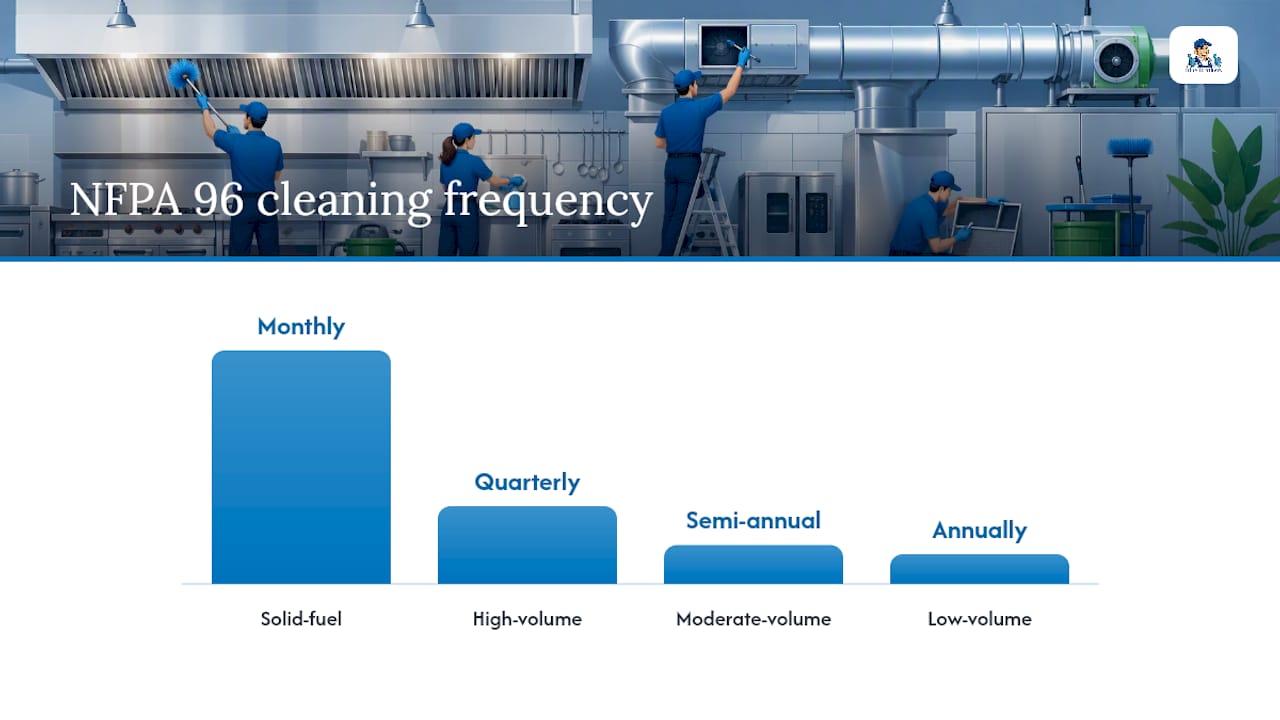
Table 11.4 of NFPA 96 sets four cleaning tiers based on cooking volume, not on how busy you feel on a Friday night:
- Monthly for solid-fuel cooking operations (wood or charcoal grills)
- Quarterly for high-volume kitchens, including 24-hour operations and heavy wok or fryer use
- Semi-annually for moderate-volume kitchens, the tier where most full-service restaurants land
- Annually for low-volume operations, such as churches, seasonal facilities, or senior centres with light cooking
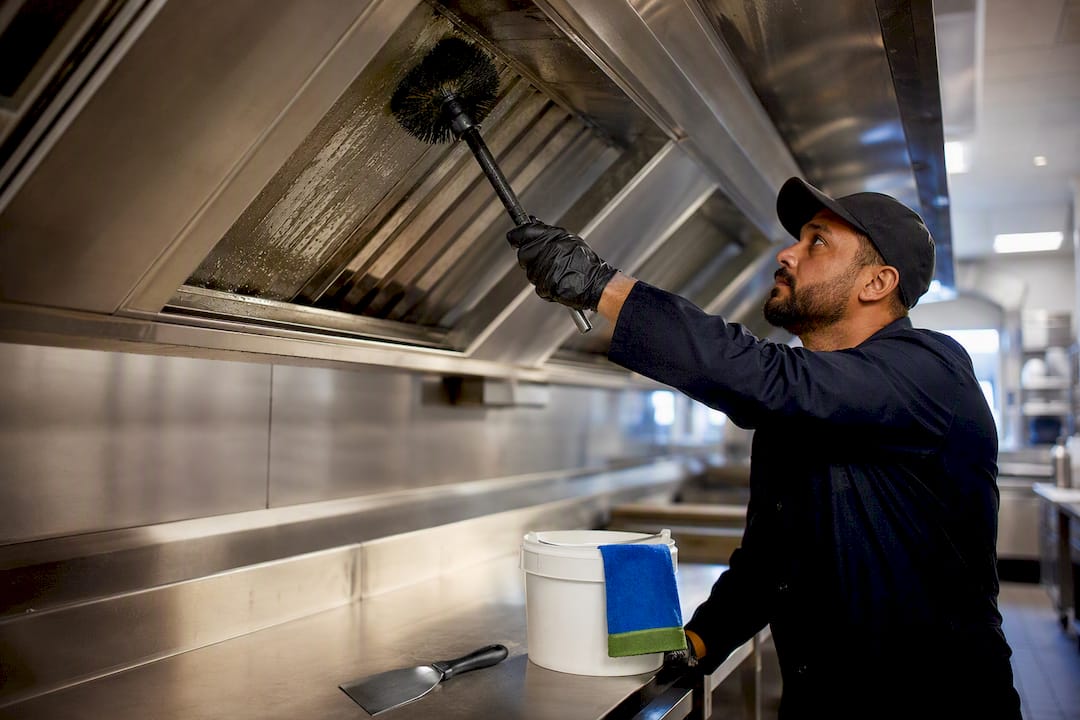
A full cleaning under NFPA 96 isn’t a wipe-down. It covers the hood interior, grease filters, the plenum, the entire duct run to the rooftop, and the fan housing, restored to bare metal. Grease film left behind, even a thin layer, means the job doesn’t count.
Pro Tip: If you’re not sure which tier applies, classify based on your busiest week of the year, not your average week. AHJs judge cleaning frequency against peak grease load, and a kitchen that runs quarterly-level volume for eight weeks a year usually gets bumped into that tier regardless of the slow months.
What must a semi-annual fire suppression inspection cover?
NFPA 96 requires suppression systems inspected at least every six months by a certified, manufacturer-authorized technician. That inspection isn’t a glance at the cylinder gauge. It covers:
- Nozzle condition and positioning over each appliance
- Piping integrity, checking for corrosion or physical damage
- Fusible link condition and placement
- Gas and electrical shutoff function
- The manual pull station
- Alarm interlocks tied to the building’s fire panel
- Cylinder pressure and weight
Fusible links deserve particular attention. Grease buildup insulates them, which can delay or prevent activation during an actual fire, so most technicians replace them at every semi-annual service rather than reusing ones that look fine. Only a technician authorized by the suppression system’s manufacturer can sign off on this inspection; anyone else’s signature won’t hold up with your AHJ or your insurer. That technician leaves you with a dated report listing every component checked, its condition, and any parts replaced.
What records do you need to stay inspection-ready?
Four documents should be within arm’s reach at all times, whether that’s a binder in the manager’s office or a folder on a shared drive:
- The current hood and duct cleaning certificate
- The last two semi-annual suppression inspection reports
- Extinguisher inspection tags
- Any correspondence with your local fire marshal about classification or variances
Digital, timestamped records are becoming the expectation rather than the exception. NFPA’s own publication updates point toward this shift, and in practice it means photo evidence of the cleaned surfaces, PDF certificates with visible timestamps, and a record system an inspector can search in seconds rather than flip through page by page. Keep records for a minimum of two full inspection cycles. Insurers increasingly deny grease fire claims outright when an operator can’t produce cleaning history, regardless of how well-maintained the kitchen actually was.
When do you need a permit or engineer sign-off?
New hood installations, major duct rerouting, or added makeup air units almost always trigger a permit requirement. Rooftop fan replacements often do too, especially when the new unit changes airflow specifications from the original design.
- Confirm with your local building department before any structural or ductwork change
- Ask your AHJ directly whether your renovation needs sealed mechanical drawings or a licensed engineer’s letter
- Get that confirmation in writing, not a verbal assurance from a front-desk clerk
AHJ enforcement varies by municipality, and one fire marshal’s interpretation of “minor alteration” can differ sharply from another’s. Provincial guidance and inspection worksheets outline common permit triggers, but the safest move is always a direct conversation with your local fire official before work starts, not after.
Who should you hire for NFPA 96 hood cleaning?
NFPA 96 requires cleaning performed by trained personnel the AHJ accepts as qualified, and industry certifications like IKECA are widely recognized as proof of that training. A crew with a pressure washer and no credentials doesn’t meet that bar, no matter how clean the hood looks afterward.
Before you book anyone, ask these questions:
- Can they show a sample cleaning certificate with the exact fields your AHJ expects?
- What certifications do the technicians on-site actually hold?
- Are they insured for commercial kitchen work specifically?
- Do they deliver digital, timestamped records, or just a paper receipt?
- Will they confirm in writing that the duct system was cleaned to bare metal?
Pro Tip: Ask to see a redacted certificate from a past job before you sign anything. A contractor who hesitates to show you their documentation format is telling you something about what you’ll get after the work is done.
Bluebrothers’s grease exhaust and hood cleaning service maps its work directly to NFPA 96 tasks, from hood interior to rooftop fan housing, and provides a cleaning certificate listing technician credentials alongside digital, timestamped records for every job.
What daily habits actually keep a kitchen compliant?
Compliance doesn’t live in the twice-yearly inspection. It lives in small habits: a five-minute visual grease check on the hood filters each closing shift, a monthly glance at extinguisher tags, and a digital folder where certificates land the moment they’re issued instead of getting buried in email. The operators who fail inspections usually aren’t the ones running dirty kitchens. They’re the ones who cleaned on schedule but can’t find the paper to prove it.
— Jayce
Book a certified NFPA 96 compliance visit with Bluebrothers
Most cleaning services hand you a receipt. A reliable cleaning service provides what your AHJ and insurer want to see: a cleaning certificate listing the areas serviced and technician credentials, plus digital, timestamped records you can pull up on your phone during an inspection, not dig for in a filing cabinet.
Bluebrothers’s grease exhaust and hood cleaning service covers the full scope NFPA 96 demands, hood interior, filters, plenum, and duct run, while commercial duct cleaning handles the rooftop fan housing and full duct system when a deeper clean is due. Certified technicians document every job to bare metal, so the certificate you get after the visit is one you can hand straight to an inspector or an insurance adjuster without a follow-up call. If your last cleaning date is fuzzy or your suppression report is nowhere to be found, that’s the sign to book now rather than wait for a failed inspection to force the issue. Get a quote for grease exhaust and hood cleaning and have your compliance paperwork sorted before your next AHJ visit.
Where to verify NFPA 96 requirements
Check the NFPA’s official standard page and NFPA LiNK for the current edition text, and confirm provincial adoption through resources like the National Building Code, Alberta edition.
Sources
- NFPA 96 compliance checklist and Table 11.4 cleaning frequencies
- Ontario regulation references and inspection expectations
- NFPA — official standard description and publication details
- BT Bulletin — NFPA 96 systems and permit/submission requirements
FAQ
Is NFPA 96 a standard for Canada?
NFPA 96 is a US-developed standard, but it’s adopted by reference in Canadian national and provincial building and fire codes. That means it functions as the minimum fire safety requirement for commercial cooking ventilation across most Canadian jurisdictions, even though NFPA itself is an American organization.
What is the NFPA 96 requirement?
NFPA 96 sets minimum requirements for the ventilation, grease removal, and fire suppression of commercial cooking operations, covering everything from hood construction to cleaning frequency and suppression inspections. The core requirement is straightforward: exhaust systems must be cleaned on a schedule tied to cooking volume, restored to bare metal each time, and suppression systems must be inspected at least every six months.
Do NFPA standards apply in Canada?
Yes. NFPA standards, including NFPA 96, are commonly referenced within Canadian provincial building and fire codes, which gives them legal weight even though NFPA is a US-based body. Local AHJs still hold final say on enforcement and can apply requirements more strictly than the national minimum.
What are the NFPA 96 requirements for kitchen hoods?
Kitchen hoods must be constructed with welded seams, fitted with labelled access panels for cleaning, and connected to ducts that run without gaps to the rooftop exhaust fan.
How much does professional hood cleaning cost?
Pricing depends on hood size, duct length, and how much buildup has accumulated since the last service. Bluebrothers lists grease exhaust and hood cleaning with current rates available on request through its service page.