That musty smell is almost always moisture doing its work: mould or mildew on the evaporator coil, or water backed up in the condensate drain and pan. Start with the cheapest checks first, a filter swap and a drain flush, and run the system for a bit. Most cases clear up fast; anything still lingering after 24 to 48 hours means the contamination has moved beyond what filters and flushes can reach, so professional help is needed.
TL;DR:
- Replacing or cleaning the filter and flushing the condensate drain line are quick, low-cost steps that may resolve the musty smell within 24 to 48 hours.
- Persistent odours after initial DIY efforts typically indicate contamination in the coil, ductwork, or ongoing water issues that require professional cleaning.
- Visible mould, ongoing water damage, or health symptoms should prompt immediate professional inspection and moisture control rather than further home fixes.
- Maintaining indoor humidity between 30% and 50% and regular system maintenance help prevent the reappearance of musty odours over the long term.
- Masking the smell with deodorants is ineffective; addressing the root moisture source and microbial growth is the only lasting solution.
Table of Contents
- What’s actually causing the musty air conditioning smell
- How to fix a musty smell from vents yourself
- When a musty vent smell needs a professional, not more DIY
- Stopping the musty smell from coming back
- What most homeowners get wrong about musty vent smells
- Getting rid of a musty smell for good
- Sources
- FAQ
What’s actually causing the musty air conditioning smell
Where the smell shows up, and when, tells you almost everything. Odour that only appears when the system is running usually points to the evaporator coil or contamination spread through the ductwork. Smell that’s there constantly, even with the system off, usually means standing water in the drain pan or a clogged condensate line sitting nearby.
A few specific culprits show up again and again:
- Evaporator coil mould: dark, damp, and constantly cycling through condensation, the coil is prime real estate for mould growth, which is why cleaning it typically requires a professional with the right access and tools.
- Clogged condensate drain or full drain pan: algae and debris build up in the drain line over time, backing up water that sits and grows bacteria.
- Dirty or saturated filters: a filter loaded with dust and moisture becomes its own odour source, and the smell tends to move with airflow rather than stay fixed in one spot.
- Duct mould or leaks: once contamination gets into the ducts, it spreads the smell to multiple rooms rather than concentrating near the air handler.
- House moisture feeding the system: damp basements, laundry rooms, and poorly vented appliances all pump extra humidity into the air your HVAC system pulls in and recirculates.
There’s also a less common but distinctive one worth knowing: “dirty sock syndrome,” a bacterial, locker-room type odour that tends to show up on evaporator coils during the shoulder seasons, when the system cycles between heating and cooling modes.
How to fix a musty smell from vents yourself
Before assuming you need a service call, work through this sequence. It costs almost nothing and takes an afternoon.
- Replace or wash the filter. Check whether yours is disposable or washable, and swap it even if it looks only lightly dirty. A grimy filter restricts airflow and holds onto moisture, feeding the smell every time the fan kicks on.
- Inspect the drain pan. Locate it under or near the indoor air handler, and check for standing water, sludge, or slime. Wearing gloves, wipe it out and clear any visible debris; a pan sitting full of stagnant water is a textbook source of a persistent, unmoving odour.
- Flush the condensate drain line. A simple vinegar flush (poured down the drain access point) or a gentle shop-vac pull from the outside termination point can clear the kind of algae clog responsible for most first-line AC odour cases. Give it a few hours to drain fully before testing again.
- Clean accessible vents and registers. Pop off the covers, vacuum out dust bunnies, and wipe down any damp residue you find. This won’t fix a deep duct problem, but it removes an easy, obvious contributor.
- Ventilate and dehumidify. Open windows if weather allows, run exhaust fans, and bring in a dehumidifier if indoor humidity is running high. Aim to keep things well below the point where mould thrives.
Run the system for a day after these steps. Odour dissipating within 24 to 48 hours is a good sign the fix worked; smell that persists past that window usually means the contamination has moved past what filters and flushes can reach.
Pro Tip: Note exactly where the smell is strongest and whether it changes when the system cycles on and off. That one detail (call it a smell map) tells a technician in seconds whether to focus on the coil, the drain, or the ducts, and it saves you paying for a diagnostic that a five-minute observation could have answered.
When a musty vent smell needs a professional, not more DIY
Some signs mean you should stop troubleshooting and book an inspection instead of trying another home fix.
- The smell is still there after 24 to 48 hours of filter changes, drain flushing, and ventilation.
- You can see mould, visible discoloration, or fuzzy growth on ducts, the coil, or nearby building materials.
- There’s an active leak, water stain, or any sign of ongoing water damage near the system.
- Anyone in the household is developing respiratory symptoms, headaches, or allergy flare-ups, especially if young kids, seniors, or people with asthma live there.
- The moisture problem traces back to something bigger than the HVAC system: a leaking pipe, a damp foundation, or a wet attic that needs its own repair alongside duct or coil work.
A structured inspection and moisture-control plan beats guessing at this stage. A technician will typically clean the coil and accessible ductwork, repair or clear the condensate system properly, and walk you through humidity fixes so the smell doesn’t just come back in a month. Coil cleaning in particular is one of those jobs where professional access and cleaning agents matter, since scrubbing a coil the wrong way can bend fins or push contamination deeper into the system.
Stopping the musty smell from coming back
Fixing the smell once is only half the job. Keeping it from returning comes down to humidity control and a maintenance rhythm you actually stick to.
- Keep indoor relative humidity between 30% and 50%, and check it with a cheap hygrometer rather than guessing by feel.
- Run bathroom exhaust fans for 20 to 30 minutes after every shower, and always vent dryers to the outside, never into an attic or crawlspace.
- Consider an ERV or HRV if your home feels stuffy or damp year round; whole-house ventilation solves what a single exhaust fan can’t.
- Put filter changes, drain-line flushes, and coil inspections on a recurring calendar instead of waiting for a smell to remind you.
- After heavy rain or snowmelt, walk the basement and crawlspace for new damp spots, and keep stored boxes and furniture off the floor.
Pro Tip: Air fresheners and scented vent clips don’t remove mould or its moisture source; they just cover the smell temporarily while the growth keeps spreading underneath. Treat any deodorizer as a stopgap, not a fix.
What most homeowners get wrong about musty vent smells
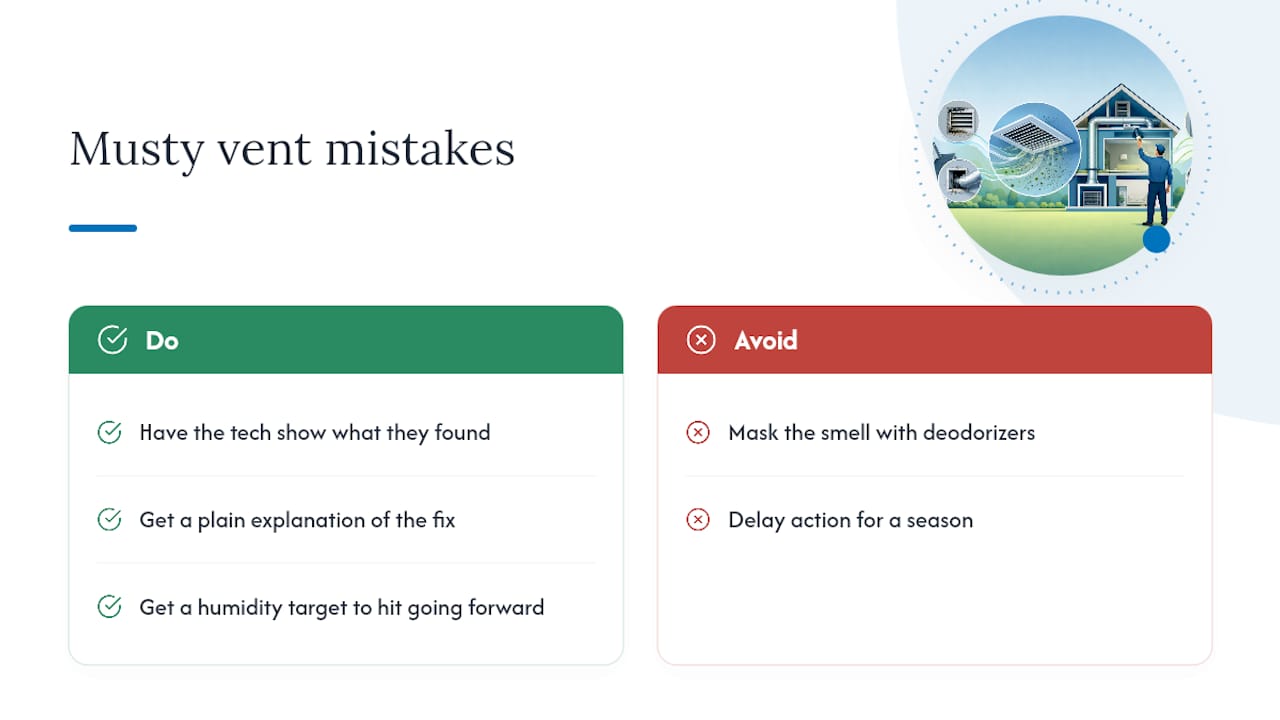
Masking the smell is the single most common mistake, and it’s the one that costs homeowners the most in the long run. Spraying a vent deodorizer or running a scented plug-in treats your nose, not the moisture sitting behind the wall or inside the coil. The odour comes back, usually worse, because the underlying growth never stopped.
The second mistake is delay. People notice the smell, do nothing for a season, and by the time they call someone, what would have been a coil cleaning has become a coil-plus-duct job. A professional visit after real remediation should leave you with noticeably fresher air within days, not weeks, and a technician who found nothing to fix in your ductwork or coil isn’t hiding something; sometimes the source really is a filter or a drain line. Judge the visit by whether they showed you what they found, explained the fix in plain terms, and gave you a humidity target to hit going forward, not by how much equipment they hauled in.
— Jayce
Getting rid of a musty smell for good
Filter swaps and drain flushes handle a lot of cases, but not all of them. When the smell has settled into the coil or spread through the ductwork, Professionals are set up to finish the job properly, with duct cleaning, coil cleaning, and condensate line service that goes further than a homeowner can safely reach on their own.

If your dryer is part of the moisture problem too, a backed-up dryer vent traps damp lint and heat that feeds the same mould issue elsewhere in the house. This service can be handled alongside duct and coil work, so one visit can cover the whole moisture picture instead of chasing it room by room. Technicians inspect the system first, show you what they find, and recommend only the work that actually needs doing, not a blanket service package.
If you’ve already tried the filter and drain checks and the smell is still there, that’s your signal to stop guessing. Book a duct cleaning inspection and get a straight answer on what’s causing it and what it takes to clear it out.

This article is general information, not a substitute for advice from a qualified doctor. Consult a qualified healthcare professional about your own circumstances before acting on anything here.
Sources
- Addressing moisture and mould in your home — Health Canada
- 6 Reasons Your AC Smells Musty & How to Fix It — Bob Vila
- Homeowner
FAQ
How do I get rid of a musty smell in my air vents?
Start by replacing the filter, flushing the condensate drain line, and cleaning out the drain pan, then run the system and check whether the smell fades within a day or two. If it doesn’t, the coil or ductwork likely needs professional cleaning.
Does a musty smell always mean mould?
Not always, since a clogged drain or dirty filter can smell musty without visible mould present, but musty odour is still a strong indicator of microbial growth, which can start colonizing damp materials within about 48 hours.
What does mould in air vents actually smell like?
It typically reads as earthy, damp, or stale, similar to a wet basement, though bacterial growth on coils can produce a sharper, sweaty “dirty sock” odour that shows up mainly during seasonal transitions.
What actually neutralizes a musty smell?
Nothing neutralizes it permanently except removing the moisture source and cleaning the affected surfaces; air fresheners and scent sprays only mask the smell temporarily while growth continues underneath.
Can a dirty duct alone cause a musty smell from vents?
Yes, ducts that have trapped moisture or accumulated dust can grow mould independent of the coil, and because ducts distribute air throughout the house, this type of contamination often shows up as odour in multiple rooms rather than near a single unit.