Repair a furnace under 12 years old when the fix is minor and inexpensive, and lean toward replacement once it passes 15 years, needs a major repair, or shows any safety fault. The right call rests on four things: age, repair cost against replacement cost, AFUE efficiency, and whether the unit is still safe to run.
TL;DR:
- Repair a furnace under 12 years old only if the issue is minor and inexpensive, but consider replacement once it exceeds 15 years or shows safety faults.
- Signs that a furnace is nearing end-of-life include high energy bills, uneven heat distribution, frequent cycling, visible corrosion, and difficultly sourcing parts for discontinued models.
- Replacing an older furnace with a 95% AFUE model can reduce heating costs by nearly 18-38%, especially as new regulations mandate higher efficiency standards by 2026.
- Safety issues such as cracked heat exchangers, severe corrosion, gas leaks, or electrical hazards require immediate replacement and complete system shutdown, not repair.
- Always get comprehensive, itemized quotes including installation, venting, and disposal, with proper heat-loss calculations, before making a replacement or repair decision.
Table of Contents
- Signs your furnace is nearing the end of its lifespan
- Cost analysis: repair vs replacement and simple break-even math
- Efficiency gains and regulatory context: AFUE and new furnace minimums
- Safety-critical faults: when repair is not acceptable
- A homeowner decision checklist you can apply now
- Getting quotes, what must be included, and an installation checklist
- Impact of repair or replacement on home resale value and long-term investment
- Environmental and regulatory considerations influencing furnace choice
- Safety first, then value: how cleaning and inspection fit the decision
- How Blue Brothers can help before you decide
- Sources
- FAQ
Signs your furnace is nearing the end of its lifespan
Most gas furnaces typically last well over a decade with regular maintenance. Past that mark, components such as heat exchangers, igniters, and control boards wear out faster, and each repair becomes a bet against the next one.
A pattern matters more than any single breakdown. One repair a decade is normal wear. Three service calls in two winters is a furnace telling you it’s done.
- Heating bills climb even though the thermostat setting hasn’t changed
- Some rooms run cold while others overheat, a sign the system can no longer distribute air evenly
- The burner cycles on and off more often, or runs unusually long to reach temperature
- Rust, scorch marks, or corrosion show up around the burner compartment or flue
- Banging, screeching, or rattling starts during startup or shutdown
- A technician struggles to find parts because the model is discontinued
Any one of these is worth a look. Several together, especially in a furnace past 15 years, usually mean the unit is closer to failure than to another good season.
Cost analysis: repair vs replacement and simple break-even math
Past that threshold, or once the furnace is older, the math tips toward replacement.
Here’s how that plays out with a simple illustrative example:
- Say a furnace is 17 years old and needs a $1,800 repair for a failing heat exchanger.
- A new high-efficiency furnace for the same home runs an estimated $4,500 to $6,500 installed, depending on sizing and venting work.
- The $1,800 repair is about 30 to 40% of replacement cost on a furnace already past its expected service life, with no guarantee the next component won’t fail within a year or two.
- Factor in that a newer, higher-AFUE furnace also lowers the monthly heating bill, which chips away at the gap between the repair cost and the replacement cost over time.
The trap is treating each repair as an isolated decision. A $300 fix looks cheap in the moment, but three of those on a 16-year-old furnace add up to more than half the cost of a new install, without buying any extra years of reliable service. When comparing quotes, always ask whether the replacement price includes removal and disposal of the old unit. Some installers quote the new furnace alone and add disposal later.
Efficiency gains and regulatory context: AFUE and new furnace minimums
AFUE, or Annual Fuel Utilization Efficiency, measures how much of the fuel a furnace burns actually turns into heat for your home rather than escaping up the vent.
Replacing an older furnace can cut heating costs substantially. According to Natural Resources Canada, swapping a 20-year-old furnace rated at 78% AFUE for a new 95% AFUE model can lower annual heating energy costs by about 18%, and replacing a 60% AFUE unit with a 95% model can save up to about 38% annually.
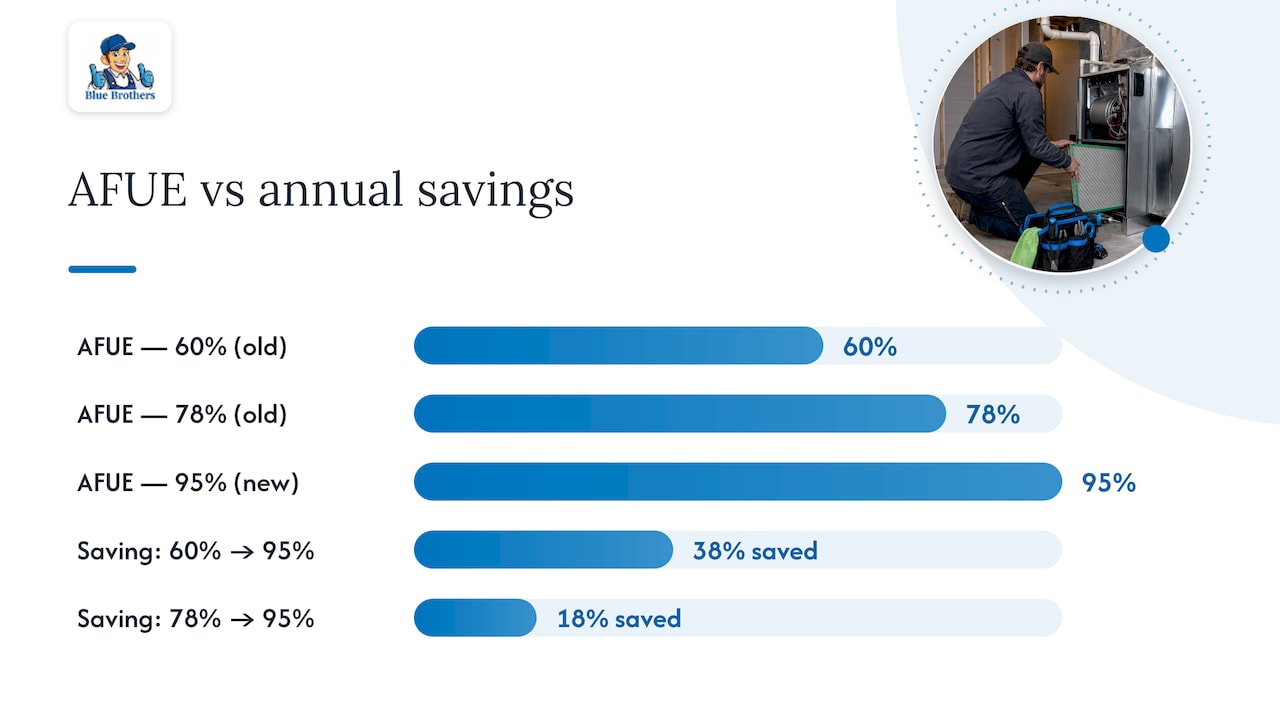
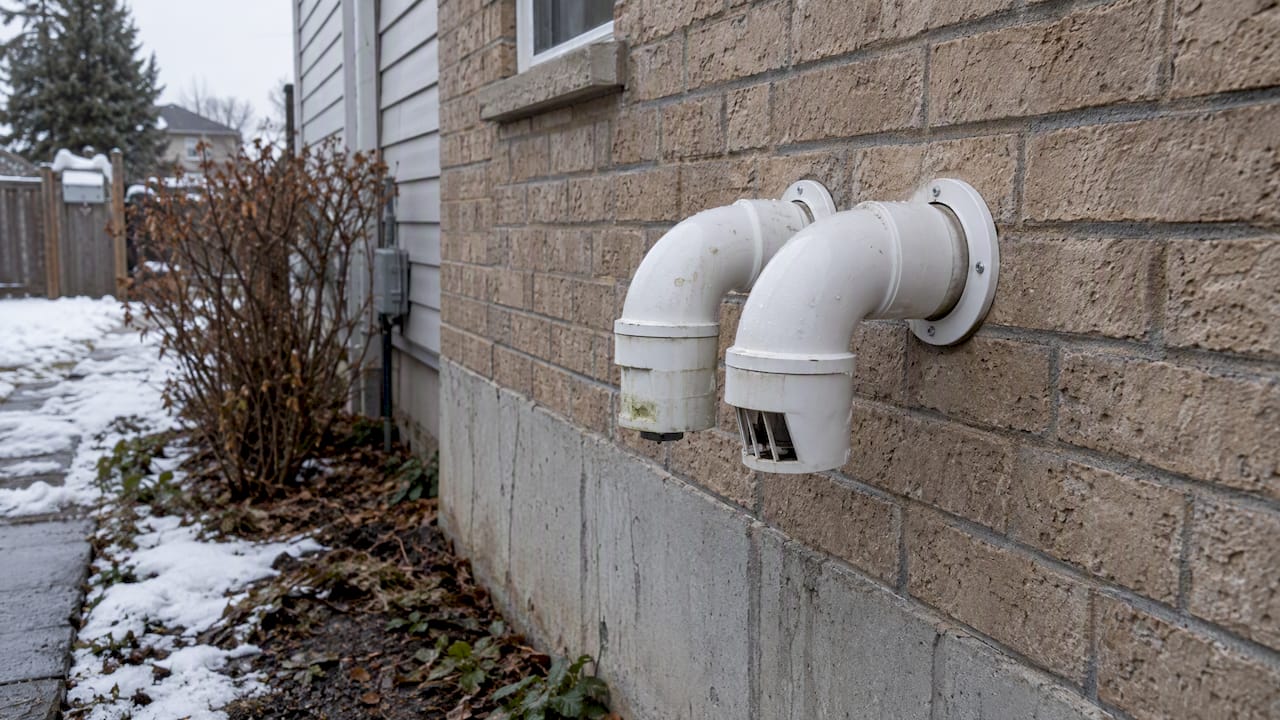
Shopping today also means running into a regulatory floor. As of 2026, most new gas furnaces installed must meet a minimum AFUE of 95%, which in practice means a condensing furnace with sidewall venting rather than a traditional chimney flue, according to Natural Resources Canada’s efficiency regulations. That shift affects installation scope: a furnace retiring a masonry chimney may need that chimney lined if it still serves a water heater, which is a cost worth asking about upfront. Beyond the AFUE rating, features like two-stage burners and variable-speed blowers improve comfort and quiet operation, and are worth asking about when comparing models.
Safety-critical faults: when repair is not acceptable
Some faults aren’t a cost question at all. A cracked heat exchanger lets combustion gases, including carbon monoxide, leak into the air your furnace circulates through the house. A technician who suspects a crack should confirm it with combustion and pressure testing, not a visual guess, and the standard remedy is replacement rather than a patch repair.
Other conditions that should stop repair-only thinking:
- Severe corrosion around the burner or flue, which often signals a deeper venting or condensation problem
- Damage to a masonry chimney from acidic condensation, a common issue when a high-efficiency furnace vents into an old flue built for a different type of appliance
- A persistent gas odour or suspected leak
- Exposed wiring, burning smells, or repeated electrical trips at the furnace
If a technician flags any of these, stop using the furnace until it’s cleared. Install carbon monoxide detectors near sleeping areas regardless of furnace age, and treat any CO alarm as a reason to call a licensed technician immediately rather than wait for a scheduled appointment.
Pro Tip: Never let anyone “patch” a cracked heat exchanger. Combustion testing confirms the crack, and replacement is the only safe fix.
A homeowner decision checklist you can apply now
Turning all of this into a decision is easier with a short, ordered process rather than a gut call under pressure.
- Write down the furnace’s age, the date of its last major repair, and how many service calls it’s needed in the past two to three years.
- Get an itemised quote for the current repair, and at least one written replacement quote that includes a proper heat-loss calculation under CSA F280 rather than an estimate based on square footage alone.
- Apply the 30% rule against the furnace’s age: a cheap repair on a young furnace is a repair, a costly repair on an old one is a replacement, and any safety fault overrides the math entirely.
- Weigh in the AFUE-based savings estimate for your current unit, any rebates available, remaining warranty coverage, and whether ducts or venting will need work regardless of which path you choose.
Keep this list next to the quotes when they come in. It turns a stressful, time-pressured decision, often made with a cold house and an impatient family, into a five-minute comparison.
Getting quotes, what must be included, and an installation checklist
A written quote should show the total installed cost, itemised equipment and labour, any duct or venting changes, permit responsibility, disposal of the old unit, an expected timeline, and the warranty terms on both parts and labour. A quote missing any of these is incomplete, no matter how competitive the bottom line looks.
Sizing deserves particular attention. NRCan’s consumer guidance recommends a heat-loss calculation following CSA F280 rather than matching the new furnace to the old one’s rated size. An oversized furnace short-cycles, wastes fuel, and wears out faster, so a contractor who sizes by floor area alone is skipping a step that affects both comfort and cost.
Watch for these common add-ons that change the final bill:
- A stainless steel chimney liner, needed when a masonry flue stays in service for a water heater
- A new condensate drain line, required for condensing furnaces
- Duct modifications if airflow needs rebalancing for the new unit
- Gas line upgrades if the new furnace has different input requirements
- Utility inspection or permit fees, which vary by municipality
Before signing, confirm the installer is licensed, ask for references, and expect them to explain their sizing and venting choices clearly rather than brushing past the question.
Impact of repair or replacement on home resale value and long-term investment
A furnace doesn’t sell a house, but an old, unreliable one can slow a sale down. Home inspectors flag furnaces past 15 to 20 years as an item buyers will likely need to budget for soon, and that flag often becomes a negotiating point at the offer stage.
A newer, higher-efficiency furnace does the opposite: it’s one less thing an inspector notes and one less repair a buyer has to plan around. It also lowers the home’s ongoing utility costs, which matters to buyers comparing similar listings. That said, a furnace replacement rarely recoups its full cost as a standalone renovation line item the way a kitchen or bathroom update might. Its value shows up more in avoiding a deduction at inspection time than in adding a premium to the asking price.
For homeowners planning to stay put for another decade or more, the calculation shifts toward comfort and operating cost rather than resale. A furnace bought today under the 95% AFUE minimum will still be relevant when the home eventually sells, since that efficiency standard isn’t going backward. For anyone weighing a furnace replacement alongside a larger project, such as a full basement or HVAC overhaul tied to a renovation, it’s worth budgeting them together since venting and ductwork changes often overlap. Resources like Y&CO Build’s renovation cost guide can help frame that broader budget.
Environmental and regulatory considerations influencing furnace choice
The 95% AFUE minimum for most new gas furnaces isn’t just a cost issue, it’s a fuel-efficiency policy reducing the total natural gas burned per household over the equipment’s lifespan, as outlined in NRCan’s gas furnace regulations. A furnace bought today is required to meet that baseline, which is part of why older 60 to 80% AFUE units feel increasingly out of step, not just older.
Rebate programs for high-efficiency heating equipment exist at various points in time and vary by province and utility, so it’s worth checking current municipal and utility programs before finalizing a replacement quote, since a rebate can shift the break-even math from the cost-analysis section meaningfully in favour of replacing sooner rather than later.
Beyond regulation, a condensing furnace’s venting requirements are themselves an environmental consideration. That’s a detail easy to overlook when comparing sticker prices on furnace quotes, but it affects both the building’s long-term condition and the safety of the exhaust path.
Safety first, then value: how cleaning and inspection fit the decision
Safety decides the question before cost ever gets a vote. Short of a safety fault, a professional cleaning and inspection often clears up whether a furnace genuinely needs replacing or just attention, sometimes buying it another season without masking a real hazard.
— Jayce
How Blue Brothers can help before you decide
Before a furnace replacement quote makes sense, a clean system gives you a truer read on its real condition and efficiency. Furnace Cleaning from Blue Brothers, priced from $50 to $300, clears the debris and buildup that can make a healthy furnace look like a failing one, and it’s a practical first step before you call a contractor for a replacement estimate.
Our technicians also check dryer vents and ducts while they’re on-site, since airflow problems elsewhere in the system often get blamed on the furnace itself. If your ducts haven’t been cleaned recently, a duct cleaning service can rule out that variable before you spend money on a new unit. Request a quote and get a clear read on your system before you decide.
FAQ
Should a 25-year-old furnace be replaced?
Yes, a furnace well past the typical 15 to 20 year service life is a strong candidate for replacement rather than repair, even if it’s still running. At that age, parts are often discontinued, efficiency lags well behind current standards, and the risk of a safety fault like a cracked heat exchanger rises.
What is the $5,000 rule in HVAC?
It’s a variation on the repair-versus-replace rule of thumb: consider the furnace’s age and repair cost together, and if repair costs approach a significant fraction of replacement cost, replacement is usually the better value. It’s a rough guideline, not a strict formula, and a confirmed safety fault should override any cost consideration.
How much does it cost to replace a furnace for a 2,000 sq ft house?
Furnace replacement costs depend on the home’s heat loss, the furnace’s efficiency rating, and any venting or ductwork changes needed, so a licensed contractor’s written quote based on a CSA F280 heat-loss calculation is the only reliable way to get an accurate number for a specific home. Square footage alone isn’t a sound basis for sizing or pricing a furnace.
What is the most common furnace failure?
Ignition system failures and worn-out blower motors are among the most frequent reasons furnaces stop heating reliably, alongside thermostat and control board faults as units age. A cracked heat exchanger is less common but far more serious, since it’s a safety issue rather than a simple mechanical failure.