Duct cleaning damages a system only when the job is done carelessly: too much suction on thin ductwork, harsh methods on fibreglass or electrical parts, dampers left in the wrong position, or dust pushed into rooms you live in. Each of these has a known cause and a known prevention. The way to avoid all of them is to hire certified technicians who follow a recognized standard. At Blue Brothers, air duct cleaning is done by certified technicians using advanced equipment and safety protocols, and below we explain what that protects you from.
TL;DR
- The main physical risks are collapsed or punctured ducts, damaged duct insulation, and dampers that are moved and not put back.
- The main air quality risk is dust released into occupied rooms while the system is disturbed. Containment during the job and airing out afterward address it.
- Wet cleaning, power washing and steam should not be used on electrical, fibreglass or porous components.
- Before the job, ask about experience, containment, dust-collection equipment and what chemicals, if any, will be used.
- Dryer vents carry a different risk: lint buildup, which is a fire hazard. A clean vent reduces that risk.
Table of Contents
- What actually happens during a duct cleaning
- Where damage happens
- Dust in the air: the risk you can feel
- Chemicals, sanitizers and sealants
- What to check before you book
- After the cleaning: signs worth a second look
- Dryer vents: a different kind of risk
- Commercial kitchens
- Perspective
- Book a careful clean
- FAQ
- Sources
What actually happens during a duct cleaning
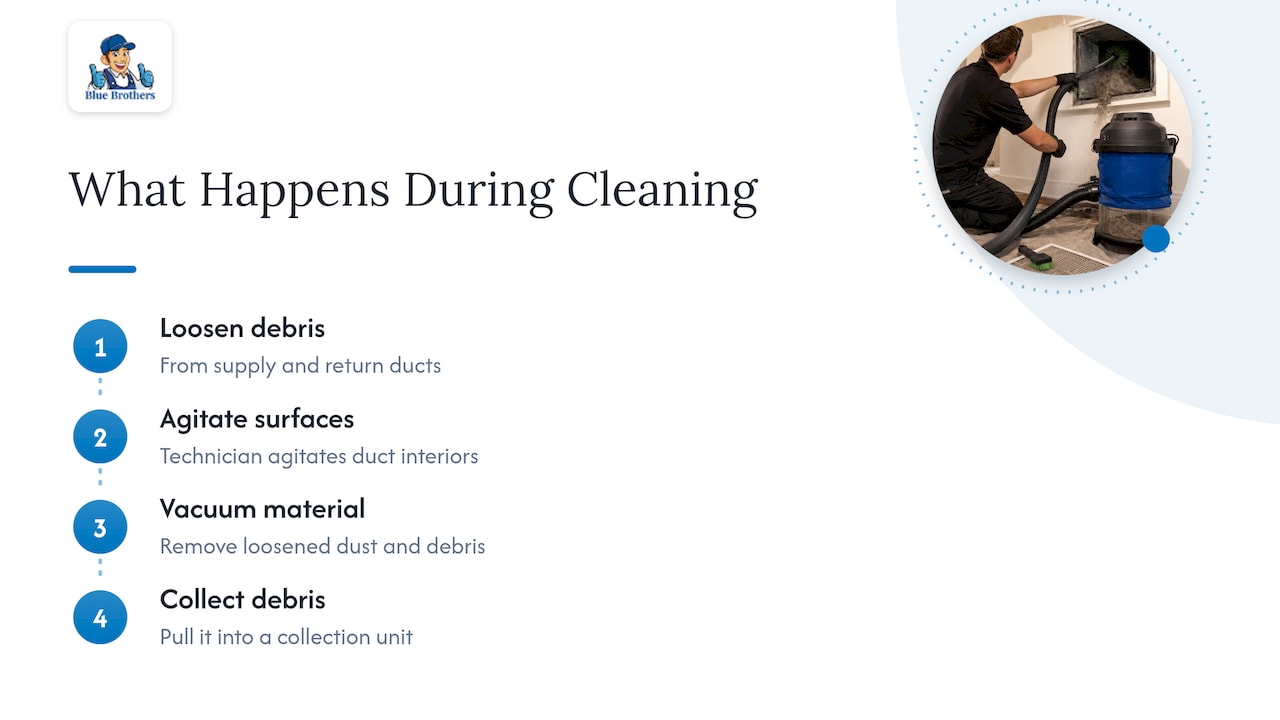
A duct cleaning job loosens dust and debris from the inside of the supply and return ducts and pulls it into a collection unit. The technician agitates surfaces, vacuums the loosened material and, in some cases, cleans the furnace blower and related parts. The system is physically disturbed, and that is where nearly every risk comes from.
Prevention is simple in principle. Suction must be strong enough to capture debris but not so strong that it deforms the ductwork. Tools must suit the material they touch. Everything moved must be put back. And the dust that is dislodged must go into the collector, not into your living room.
Where damage happens
Collapsed or punctured ducts
Vacuum equipment has to be used with care, because high negative pressure can collapse ducts, according to a Canadian indoor air quality guide for building maintenance. Sheet metal trunk lines are sturdy, but older or lightly built runs and thin joints are less forgiving.
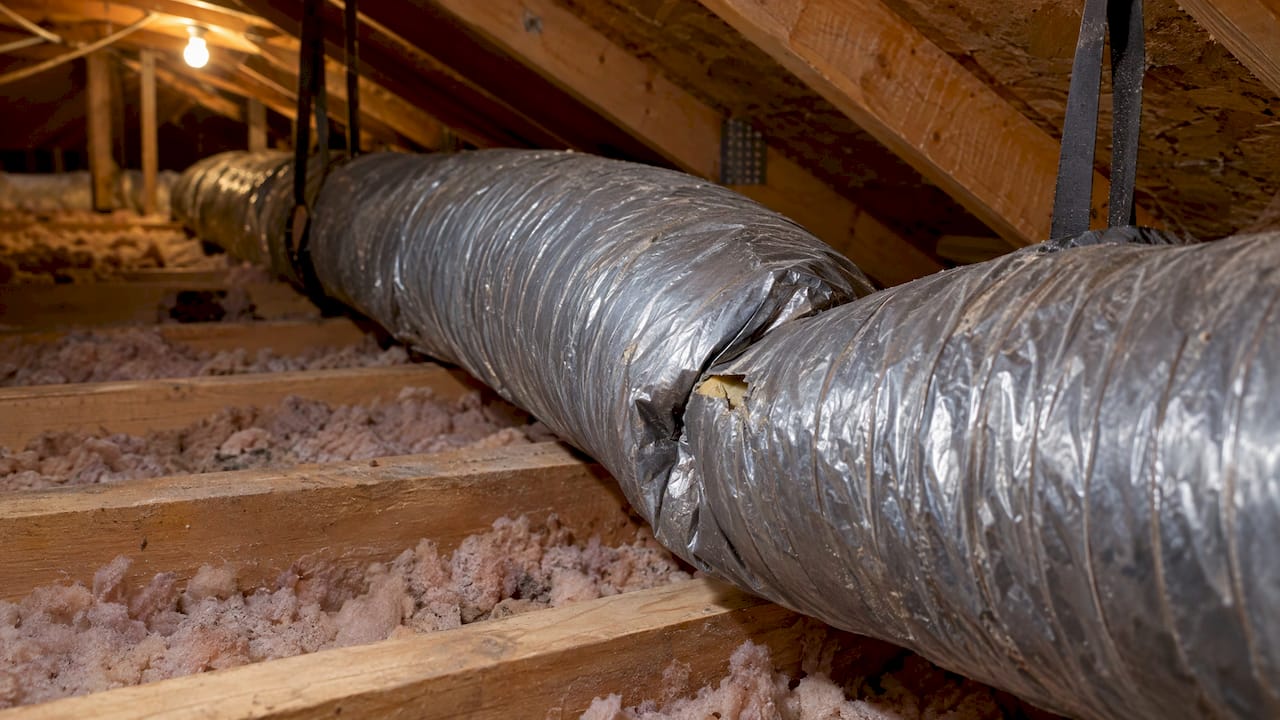
Flexible ducts are the other weak point. Many homes now have flexible, coil-style ducts that are vulnerable to punctures during cleaning. If your home has these, tell the company before the visit so the technician chooses brushes and tools that suit them.
Fibreglass insulation and porous parts
Some ductwork is lined or wrapped with fibreglass. Aggressive cleaning can damage interior fibreglass insulation and loosen fibres that then become airborne. The industry standard published by the National Air Duct Cleaners Association (NADCA), the trade body that sets duct cleaning practice, states that wet cleaning, power washing and steam cleaning should never be applied to electrical, fibreglass or porous components. That one rule rules out a lot of improvised, water-heavy methods.
Dampers and air-directional devices
Dampers are the small plates inside ducts that balance airflow between rooms, and your house may have been tuned by moving them. The same NADCA standard says cleaning must not damage any HVAC component, and that the position of every damper and air-directional device should be marked before cleaning and restored afterward.
If a technician skips this, the symptom is not dramatic. One room is suddenly colder, another stuffy, and nobody connects it to the cleaning. If a duct is already loose or leaking, that is a repair question rather than a cleaning one, and duct repair and sealing is where it gets fixed, so that the cleaned system holds its settings.
Skipped components and re-contamination
A system is a loop: registers, ducts, furnace cabinet, blower, coil. The US Environmental Protection Agency notes that failing to clean one part of a contaminated system can re-contaminate the whole system. A partial job can leave you with a result that does not last. This is why we also offer furnace cleaning, air conditioning coil cleaning and HRV cleaning alongside duct work.
Dust in the air: the risk you can feel
When ducts are disturbed, airborne particles can temporarily increase, as the Government of Canada’s military housing handbook notes. The reasons are well understood:
- Weak containment. Inadequate vacuuming can discharge fine particles into occupied spaces.
- Negative pressure not maintained. Contractors should keep ducts and the HVAC system under negative pressure during cleaning, which draws dust toward the collector and away from the rooms.
- Old residue. Cleaning can free particles that were stuck to the duct by oil residues from manufacturing or corrosion prevention, which temporarily raises airborne levels.
- Exhaust indoors. The EPA advises asking whether a provider uses HEPA filtration equipment if the vacuum exhausts indoors. HEPA means a high-efficiency filter that traps very fine particles.
For a family at home, the practical answers are simple: ask how the work area is contained, keep children and pets away from the equipment, and open windows afterward if the weather allows.
After the job
The American Industrial Hygiene Association recommends at least ten air changes in the building after cleaning and before occupants return. For a home, that means running the fan and ventilating once the work is finished. For a small business or a property manager, it means scheduling the work outside opening hours or tenant occupancy, so the space can be aired out before anyone is back.
Chemicals, sanitizers and sealants
Not every job involves chemicals, and a straightforward cleaning does not need them. If a biocide (a product that kills microbes) or sealant is proposed, the guidance is clear: select approved products and follow the manufacturer’s directions, and use cleaning chemicals according to label instructions. Ask for the product name and its label before anything goes into your ducts, especially if someone in the home has asthma or sensitivities.
What to check before you book
This checklist works for a house, a rental building or a shop.
- Experience and certification. Ask whether the crew does duct cleaning every week and holds industry certification.
- Containment. Ask how dust is kept out of living areas and what collects it.
- Equipment. Ask whether the collection unit exhausts outside or through a HEPA filter.
- Duct type. Tell them if you have flexible ducts, fibreglass liner or recent renovation dust, so tools are chosen to suit.
- Dampers. Ask that positions are marked and restored.
- Chemicals. Ask whether any product will be used and request the name.
- Price. Ask for a written quote that lists exactly what is included.
Our certified technicians use advanced equipment and safety protocols, and we price clearly with no hidden fees. Air duct cleaning at Blue Brothers is listed at $400 to $800 CAD for a one-off job, depending on the home.
If you rent or live in managed housing, check your lease or building rules first. For example, military housing in Canada requires prior approval, and the occupant is responsible for costs and damage to the unit. Property managers will want the same clarity in writing for any tenant-occupied building.
After the cleaning: signs worth a second look
Most homes see nothing but cleaner registers. Within the first few days, watch for the following and call the company back if you notice any of them:
- A room with weaker or stronger airflow than before. A damper may not have been returned to its position.
- Rattling, whistling or a new hollow sound at a register. A joint or flexible duct may have shifted.
- A new smell. A strong chemical odour points to a product used, which you can ask about by name.
- Visible dust or grit at registers for more than a day or two. Some settling is normal after the system is disturbed, but heavy dust that keeps coming suggests a component was missed.
- Furnace cycling oddly or shutting off. Report it so the technician can check that nothing was left blocked or disconnected.
A good company treats these calls as part of the job. We offer round-the-clock customer support, which is why you can reach us when something seems off, not only during business hours.
Dryer vents: a different kind of risk
A dryer vent is not a home-air duct. Its job is to carry hot, lint-laden air outdoors, and the hazard is not damage from cleaning but fire from neglect. The National Building Code of Canada notes that collective venting may cause lint buildup in exhaust ducts and create a fire hazard. Buildings with shared or long vent runs are the typical concern for property managers.
For busy families the point is simple: a lint-clogged vent is the thing to fix. Our dryer vent cleaning is listed at $99 to $225 CAD per job. For roof outlets that cannot be safely reached from the ground, see our guide to rooftop dryer vent cleaning safety.
Commercial kitchens
Grease exhaust and hood systems are cleaned to NFPA 96, the fire safety standard for commercial cooking ventilation. The risk in a kitchen is grease buildup, and the safeguard is a scheduled, certified clean. Our grease exhaust and hood cleaning is listed at $400 to $800 CAD, and we offer unlimited hood cleaning packages for restaurants and food plants.
Perspective
When customers ask us about damage, we take it as a fair question about how the work is done. Ducts are a system: sheet metal, flexible runs, liners, dampers, a furnace blower. Each piece needs the right tool and the right amount of force.
That is why we put certified technicians, advanced equipment and safety protocols at the centre of every job, residential or commercial. Careful work means the airflow in your home is the same after the visit as before, only cleaner.
Our approach is meticulous service tailored to the building, with clear pricing and no hidden fees. If something seems off after we leave, you can reach us at any hour, including emergencies.
Jayce
Book a careful clean
We clean ducts, furnaces, AC coils, HRVs, dryer vents and commercial hood systems across British Columbia, Alberta and Saskatchewan. For homes, start with our residential duct cleaning page or request a quote on the Blue Brothers site. Tell us about flexible ducts, recent renovations or any sensitivities in the household, and we will plan around them.
If you have had construction done recently, our guide on post-renovation duct cleaning covers the checks that matter, and the 30 to 60 minute rule for renovation dust explains how to keep dust from spreading.
FAQ
Can air duct cleaning damage my furnace or ducts?
It can when the wrong force or tools are used: excess suction can collapse ducts, and rough methods can puncture flexible runs or disturb insulation. Using a certified crew that follows an industry standard avoids this. Tell the company about any flexible or lined ducts before the visit.
How long does it take for dust to settle after duct cleaning?
A little extra dust in the air for a short time after the job is normal, since the system has been disturbed. Ventilating the home and running the fan helps clear it. If dust keeps appearing at registers after a day or two, contact the company so they can check for a missed component.
Why do some rooms feel different after duct cleaning?
Usually a damper or directional vane was moved and not put back. The NADCA standard says positions should be marked before cleaning and restored afterward. Call the company and ask them to reset it.
Is dryer vent cleaning risky in the same way?
No. The concern with dryer vents is lint buildup, which is a fire hazard, and cleaning removes it. Long or shared vent runs and rooftop outlets are the ones to have done by professionals.
Sources
- Module 3 Custodial Activities, Maintenance, Repair and Operations (Canadian IAQ resource)
- Air duct cleaning recommendation (The Philadelphia Inquirer, 2023)
- Occupant Handbook, Indoor air quality (Canada.ca)
- Should You Have the Air Ducts in Your Home Cleaned? (US EPA)
- HVAC filters, duct cleaning, and indoor air quality (UGA Extension)
- What’s Up with Duct Cleaning? (AIHA, 2020)
- The NADCA Standard, 2021 edition
- Indoor Air Pollution: An Introduction for Health Professionals (US EPA)
- NBC Part 6, HVAC (National Research Council Canada)