What counts as a compliant clean is set by your insurer and your local authority having jurisdiction, who typically reference NFPA 96 as the technical standard. Inspection drives the schedule rather than a fixed calendar date, with cleaning intervals generally ranging from quarterly to annually depending on cooking volume. The proof you need in hand afterward is a maintenance certificate naming the cleaner, the date, and the areas serviced.
TL;DR:
- Ask your local authority and insurer which code edition, cleaning interval, and records they require; the National Fire Code varies by province and municipality.
- Alberta guidance calls for inspections at least every seven days, with cleaning triggered by hazardous grease buildup; typical schedules span three to 12 months.
- A compliant service must cover the Type I exhaust path, including hood, filters, plenum, accessible ducts, ecology unit, and fan; reports must document inaccessible sections.
- Before booking, confirm recognized training, a qualified supervisor present, and Type I experience; require certificates to list cleaned areas, omissions, and the next service date.
- Washing filters and wiping the canopy are interim tasks, not substitutes for professional inspection; grease beyond filters, unusual smoke, or odors warrant prompt inspection.
Table of Contents
- Codes, standards and enforcement: NFPA 96, National Fire Code and the AHJ
- How frequency is decided: inspection-led thresholds and key factors
- Scope and acceptable outcomes of a compliant clean
- Hiring, verification and the maintenance certificate checklist
- Access, safety and how to prepare your site for a full-system clean
- Operator interim maintenance vs professional inspection and cleaning
- Common field findings and practical compliance tips
- Booking a compliance-focused hood cleaning
- FAQ
- Sources
Codes, standards and enforcement: NFPA 96, National Fire Code and the AHJ
NFPA 96 is the technical standard most contractors, insurers, and inspectors point to when they talk about kitchen exhaust cleaning. It isn’t automatically the law everywhere, though. The National Fire Code is a model code that provinces and territories adopt and amend on their own schedules, and it can reference NFPA 96 or similar standards rather than restating them in full. That means the actual enforceable rule in your kitchen depends on which edition your province or municipality has adopted and how your local authority having jurisdiction (AHJ) applies it.
This is where a lot of operators get tripped up. A generic “clean every six months” schedule pulled from a blog post or a contractor’s sales sheet might not match what your fire inspector or insurer actually expects. Before you set a cleaning calendar, it’s worth doing three things:
- Ask your local fire department or building authority which edition of the National Fire Code or NFPA 96 they enforce.
- Ask your insurer directly what cleaning frequency and documentation they require to keep your policy valid.
- Get the referenced standard’s name and edition year in writing from whoever sets your requirements, rather than relying on verbal assurance.
Our NFPA 96 compliance guide walks through this process in more detail if you’re setting up a schedule for the first time.
How frequency is decided: inspection-led thresholds and key factors
There’s no single number that applies to every kitchen. Inspectors and standards bodies look at how your kitchen actually operates, then set a schedule based on what they find. The main factors that push a kitchen toward more frequent cleaning include:
- Cooking method: deep-fat frying, charbroiling, and wok cooking generate far more grease than grilling or baking.
- Volume: a kitchen running 16-hour service days accumulates grease faster than one open for lunch only.
- Oil type: some oils polymerize and build up faster than others under heat.
- Filter maintenance: poorly maintained or missing grease filters let more residue travel into the ductwork.
- Airflow and ecology unit condition: reduced airflow or a failing ecology unit changes how grease settles through the system.
Alberta fire code guidance calls for hood, duct, and filter inspection at intervals not greater than 7 days, with cleaning triggered once grease deposits reach a hazardous thickness rather than on a fixed date. That same guidance outlines typical cleaning ranges: up to 12 months for lighter-use kitchens, and tightening to around 3 months for operations doing heavy frying or charbroiling. The AHJ can set a tighter or looser schedule than these general ranges, so treat them as a starting point rather than a guarantee. Ask your inspector to put their recommended schedule for your specific kitchen in writing after a site visit.
Scope and acceptable outcomes of a compliant clean
A compliant clean covers the entire Type I exhaust path, not just the visible hood surface. Standards from ANSI/IKECA C10 define the cleaning methodology expected for these systems and what “clean” should look like when the job is done.
- Canopy and hood surfaces, inside and out, down to bare metal where grease has baked on.
- Grease-removal devices, including baffle filters, mesh filters, or any listed filtration equipment.
- Plenum and accessible ductwork, reaching as far as access panels and duct runs allow.
- Ecology units, where installed, cleaned and inspected to the manufacturer’s own maintenance schedule.
- Rooftop or wall-mounted exhaust fans, including the fan housing and the area immediately around it.
Any section that can’t be reached or cleaned during the visit, whether due to a missing access panel or a sealed duct run, should be written down on the service report rather than left unmentioned. A certificate that silently skips a section isn’t proof of a full-system clean, and an inspector who later finds untouched ductwork behind a missing access panel will treat that as a compliance gap, not an oversight.
Hiring, verification and the maintenance certificate checklist
Alberta STANDATA guidance recommends that cleaning crews carry recognized training and that a qualified supervisor be present on site, since a verbal claim of being “NFPA certified” isn’t the same as verifiable training through a recognized organization such as IKECA. Before booking a contractor, ask for:
- Proof of training through a recognized organization, not just a company claim of certification.
- Confirmation that a qualified supervisor will be on site during the work, not just the crew.
- Evidence of prior experience specifically with Type I grease exhaust systems, not general duct work.
Once the job is finished, your certificate should list the company name, the supervisor’s name, the date of service, the areas actually cleaned, any omissions and why, the recommended date for the next service, and the training organization backing the crew’s qualifications.
Pro Tip: If a certificate is vague about what was cleaned or skips the next-due date entirely, ask the contractor to reissue it before you file it away: a thin certificate is a liability, not proof of compliance.
Access, safety and how to prepare your site for a full-system clean
Cleaners need working access panels, adequate clearance around the hood and ductwork, and safe rooftop or platform access to reach exhaust fans. Vancouver’s kitchen ventilation guidance specifically calls out access panel placement and inspection tag visibility as compliance points, not just convenience features.
Before a scheduled clean, it helps to:
- Clear storage or equipment blocking duct access panels and rooftop ladders.
- Confirm roof access timing and any permits needed for rooftop work.
- Flag any known problem areas, like a panel that’s been painted shut or a fan platform that needs repair.
Skipping this prep doesn’t just slow the job down. Missing access gets documented as an omission on the certificate, and repeated access failures can mean your system needs retrofitted access panels before a future inspection will pass.
Operator interim maintenance vs professional inspection and cleaning
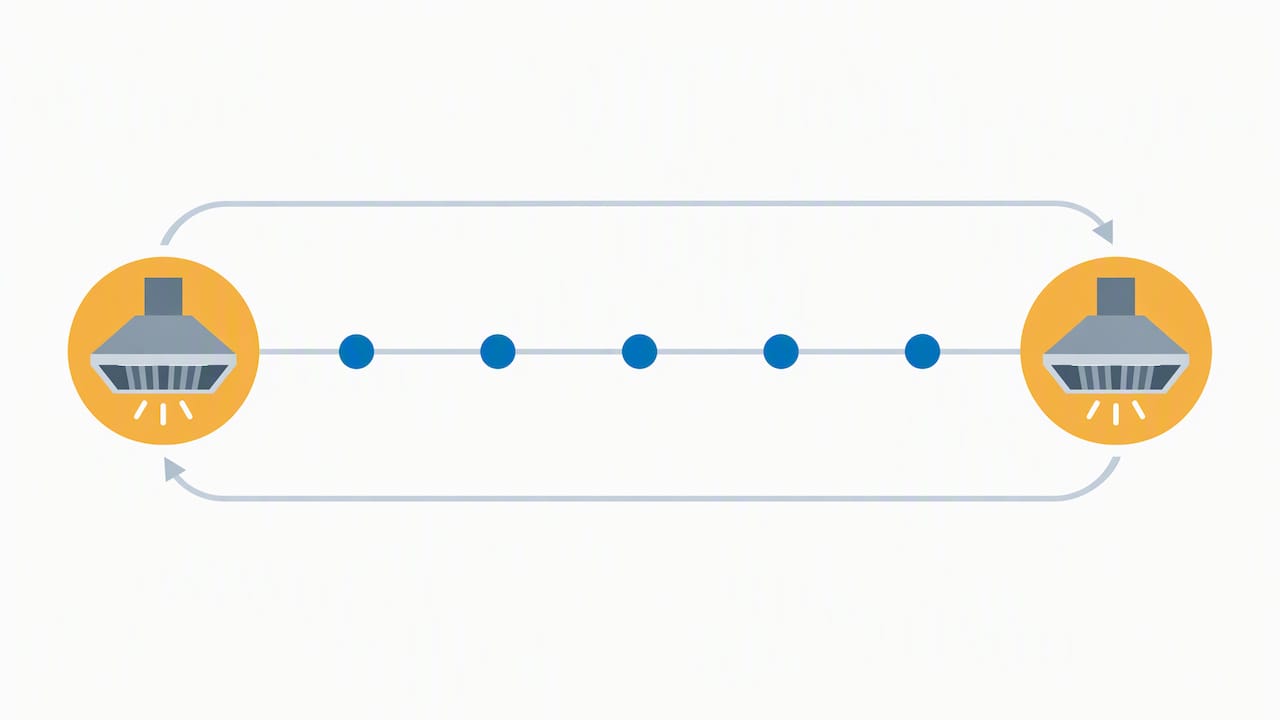
Daily and weekly upkeep matters, but it’s not a substitute for a professional cleaning cycle. Washing filters, checking the grease trap, wiping down the canopy surface, and confirming the suppression system looks intact are all reasonable interim tasks between scheduled services.
ANSI/IKECA M-10 treats this kind of maintenance as a separate category from inspection and cleaning. Filter washing reduces how fast grease builds up, but it doesn’t reach the ductwork or fan housing, and it doesn’t produce a certificate an inspector will accept in place of a professional service.
- Log interim tasks with dates, even informally, so you have a maintenance trail.
- Call for an inspection right away if you see grease pooling downstream of the filters or notice unusual smoke or odour during cooking.
Common field findings and practical compliance tips
In the field, the same few gaps show up again and again: access panels that were never installed, certificates that list a date and a signature but skip which areas were actually cleaned, and kitchens leaning on filter washing alone between professional services. A thorough clean documents every area reached, flags what wasn’t, and names the next due date clearly enough that nobody has to guess.
— Jayce
Booking a compliance-focused hood cleaning
Professional cleaners perform commercial kitchen hood and grease exhaust system cleaning to NFPA 96 standards, issuing a maintenance certificate with every job to provide documentation for inspections.
Booking an inspection typically involves:
- Requesting an inspection to assess current grease buildup and ductwork access before quoting a schedule.
- Confirming which NFPA 96 or local code edition the AHJ enforces, so the clean matches inspection expectations.
- Receiving a documented recommended schedule in writing after the first service, rather than guessing at a calendar date.
Our grease exhaust and hood cleaning page has details on scope and how to get a quote started.
FAQ
How often should a commercial kitchen hood be cleaned?
It depends on cooking volume and method rather than a fixed date: guidance suggests up to 12 months for lighter-use kitchens and closer to 3 months for heavy frying or charbroiling operations. Your AHJ or insurer can set a different schedule, so confirm their requirement directly rather than relying on a general range.
What are the legal requirements for commercial kitchen ventilation?
There’s no single national rule: the National Fire Code is a model code that provinces and municipalities adopt and amend, often referencing NFPA 96 for the technical detail. Your local AHJ determines which edition applies and enforces inspection, cleaning, and access panel requirements for your kitchen specifically.
What is the best cleaner for a kitchen exhaust fan?
The right product matters less than following a methodology that reaches every component, including the plenum, ductwork, and fan housing, not just visible surfaces. ANSI/IKECA C10 defines the cleaning methodology professional crews follow to leave Type I systems in an acceptable post-clean condition.
How often should you clean a range hood?
For a home range hood, wiping down filters monthly and washing removable grease filters is a reasonable baseline, but this guidance is built around commercial Type I systems rather than residential hoods. Commercial operators should follow their AHJ’s inspection-led schedule instead of a home-kitchen routine.
What are the 7 steps of cleaning a kitchen?
There’s no single universally cited “7 steps” framework for kitchen hood cleaning specifically; professional cleans generally follow a sequence covering canopy, filters, plenum, ductwork, fan, and ecology unit, finished with a documented certificate. Ask your contractor to walk through their specific sequence before booking if this detail matters to your records.
Sources
- National fire code / NRC Publications Archive
- ANSI/IKECA C10 standard preview
- Alberta fire code excerpts on commercial cooking equipment
- Vancouver kitchen ventilation systems guidance