For most homes in a cold climate, the smartest answer isn’t either/or: a cold-climate heat pump handles fall, spring, and mild winter days efficiently, while a furnace (or hybrid setup) covers the deep freeze. Homes with cheap natural gas and poor insulation often do better sticking with a high-efficiency furnace alone. The trade-off is consistent everywhere: heat pumps win on efficiency and summer cooling, furnaces win on raw capacity and cost predictability during extreme cold, and the sections below break down exactly where that line sits for your house.
TL;DR:
- Cold-climate air-source heat pumps maintain performance at temperatures below −15°C, but their efficiency and capacity decline significantly in extreme cold without backup systems.
- A hybrid dual-fuel system, combining a heat pump with a furnace, offers optimal efficiency and reliability in regions with severe winters, switching automatically at the economic balance point.
- Installation costs vary widely depending on system type, ductwork conditions, electrical capacity, and backup options, making site-specific quotes essential before committing to a system.
- Routine duct and furnace maintenance, including cleaning and inspections, is critical for system longevity and efficiency, regardless of whether a heat pump or furnace is used.
- Cost savings with heat pumps are highly dependent on local utility rates, existing fuel prices, and fixed connection charges, requiring homeowners to compare projected savings based on their actual bills.
Table of Contents
- Heat pump vs furnace: how a heat pump actually works
- Heat pump vs gas furnace: how furnaces generate heat
- Heat pump vs furnace cost: efficiency, COP, and AFUE side by side
- Heat pump installation cost: budgeting for the switch
- Cold-climate performance and hybrid systems: what really happens below −20°C
- Furnace maintenance tips and heat pump longevity
- Should I choose a heat pump? A decision checklist for your home
- Practitioner tips and common homeowner mistakes
- Why duct and furnace cleaning matters no matter which system you choose
- Sources
- FAQ
Heat pump vs furnace: how a heat pump actually works
A heat pump doesn’t create heat, it moves it. Even in cold air, there’s thermal energy to extract, and a heat pump uses a refrigerant cycle to pull that heat indoors, then reverses the process in summer to cool the house. That reversibility is the whole appeal: one system, two seasons.
You’ll run into a few configurations when shopping:
- Ducted air-source heat pumps (ASHP) tie into your existing duct system, similar to a central furnace setup.
- Ductless mini-splits mount on walls or ceilings and suit additions, garages, or homes without ductwork.
- Cold-climate air-source heat pumps (ccASHPs) use variable-speed compressors and enhanced controls to keep working when temperatures drop well below freezing.
- Ground-source (geothermal) heat pumps draw from stable underground temperatures and deliver the steadiest performance, at a higher upfront cost.
Efficiency is measured by coefficient of performance, or COP, the ratio of heat delivered to electricity consumed. According to Natural Resources Canada, a standard ASHP typically runs a COP between 2.0 and 5.4 at +8°C, but that drops to 1.1 to 3.7 at −8°C. ccASHPs are engineered to hold COP above 2.0 even below −15°C, which is the whole point of buying a cold-climate model instead of a standard one.
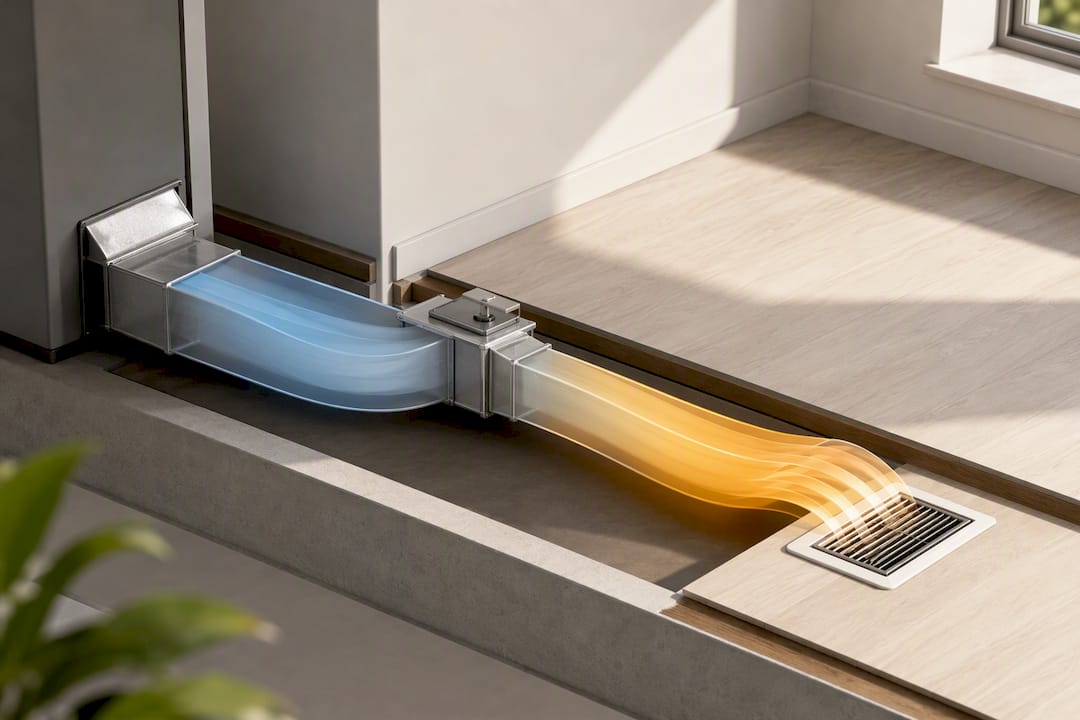
One comfort quirk worth knowing before installation: heat pumps push out a higher volume of air at a lower temperature, typically 25°C to 45°C, compared with a furnace’s 55°C to 60°C output. It heats the room just fine, but the air coming out of the vent won’t feel as hot on your hand, and some existing ductwork needs airflow adjustments to handle the higher volume comfortably.
Heat pump vs gas furnace: how furnaces generate heat
A furnace burns fuel or uses electric resistance to generate heat directly, then a blower pushes that heated air through your ducts. There’s no reversing the cycle. It only heats, which is exactly why furnaces still dominate in regions where winters are long and brutal.
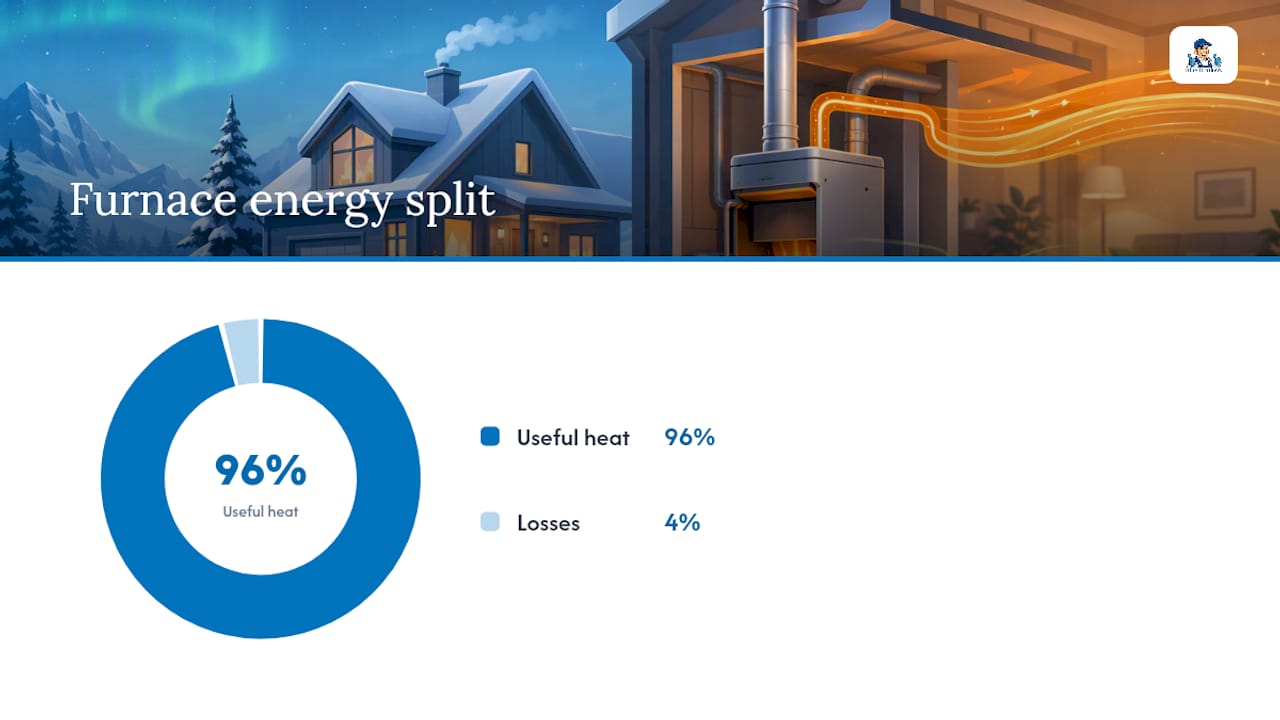
Furnace efficiency is measured with AFUE (Annual Fuel Utilization Efficiency), the percentage of fuel energy converted to usable heat. A furnace rated at 96% AFUE turns 96 cents of every fuel dollar into heat inside your home, with the rest lost to venting and combustion byproducts.
The three common fuel types come with distinct trade-offs:
- Natural gas furnaces are common where gas infrastructure already exists, offer high AFUE ratings, and produce consistently hot discharge air.
- Oil furnaces deliver strong heat output in areas without gas service, but oil prices swing more than gas and tanks need periodic inspection.
- Electric furnaces avoid combustion entirely, which simplifies venting and safety, but running cost is usually the highest of the three per unit of heat.
Furnaces also deliver noticeably hotter discharge air, which many homeowners associate with a stronger, more immediate sense of warmth on a frigid morning. The trade-offs are combustion risks (carbon monoxide, venting requirements) and emissions, but for homes with cheap gas and high fixed connection charges already sunk into the bill, a furnace often remains the more economical everyday choice.
Heat pump vs furnace cost: efficiency, COP, and AFUE side by side
COP and AFUE aren’t measuring the same thing, and conflating them is where a lot of online cost comparisons go wrong. AFUE tells you how much of the fuel you burn turns into heat, a number that barely moves with outdoor temperature. COP tells you how much heat you get per unit of electricity, and that number swings hard depending on how cold it is outside.
That swing matters enormously for your bill. NRCan’s efficiency data shows COP ranges from about 2.0 to 5.4 at moderate temperatures to a lower range at cold temperatures around −8°C, meaning a heat pump does its best work exactly when you need it least, and its hardest work during a January cold snap.
Key finding: CanmetENERGY’s cold-climate cost-effectiveness study found ccASHPs cheaper to run than electric resistance or oil furnaces, with estimated annual savings ranging from $700 to $3,500 depending on the region and home. Savings against natural gas were far thinner, often just $50 to $150 a year, and hybrid dual-fuel setups cut total energy use and emissions by roughly 15% to 35% in the scenarios studied.
A few things flip that math fast:
- Homes on natural gas with low local rates often see the smallest heat pump advantage, sometimes none at all.
- Fixed monthly gas connection charges don’t disappear just because you install a heat pump, unless you disconnect gas service entirely.
- Electricity rates vary enormously by province and utility, so a savings range that holds in one region can look completely different two provinces over.
Run the comparison against your actual utility bills, not a national average, before assuming either system wins on cost.
Heat pump installation cost: budgeting for the switch
A furnace replacement is usually the simpler quote: swap the unit, maybe upsize the vent pipe, done. A heat pump installation carries more variables, and that’s where quotes tend to spread wide between contractors.
Expect these line items to shape the final number:
- Equipment cost varies by heat pump type: ductless mini-splits sit at the low end, ducted ccASHPs and geothermal systems cost considerably more.
- Ductwork evaluation matters because heat pumps move more air volume than furnaces, and undersized or leaky ducts can throttle performance before the system ever struggles with cold.
- Electrical panel capacity gets checked early, since a heat pump adds real electrical load, and older 100-amp panels sometimes need an upgrade before installation can proceed.
- Backup heat source decisions (keep the furnace as hybrid backup, add electric resistance strips, or go heat pump only) change both the quote and the long-term operating cost.
Incentive programs can shift payback timelines significantly, and provincial or municipal rebates change from year to year, so check current offerings with your utility or provincial energy office before finalizing a budget. A simple payback estimate: take the difference between your projected annual heating cost with each system, using your real utility rates, then divide the installation cost premium by that annual savings figure to get a rough number of years to break even.
Pro Tip: Ask your contractor for a load calculation (a Manual J or equivalent) before signing anything. A heat pump sized off square footage alone, without accounting for insulation and window losses, is one of the most common reasons homeowners end up disappointed with cold-weather performance.
Cold-climate performance and hybrid systems: what really happens below −20°C
This is where marketing claims and real-world performance data part ways. NRCan states that ccASHPs are engineered to extract heat down to about −30°C, and field testing backs that up with numbers, not just specs. The Canadian Centre for Housing Technology tested a mini-split ccASHP and recorded an apparent COP near 2.3 at −15°C and approximately 2.0 at very low temperatures around −25°C. Energy use stayed well below a standard heating system throughout, though backup heat kicked in during the coldest stretches of the test period.
That last detail is exactly why hybrid, or dual-fuel, systems dominate cold-climate recommendations. A hybrid setup pairs a heat pump with a furnace and lets a controller switch between them automatically at what’s called the economic balance point (e-BPT), the outdoor temperature at which running the furnace actually costs less per unit of heat than running the heat pump. Below that point, the furnace takes over; above it, the heat pump runs.
Three practical scenarios cover most homeowners:
- Retrofit with hybrid controls: keep your existing furnace, add a ccASHP, and let the e-BPT logic handle switching. This suits homes already on natural gas that want efficiency gains without giving up cold-weather reliability.
- Full heat pump replacement: viable in milder cold-climate zones or well-insulated homes where the ccASHP’s low-temperature capacity, checked against manufacturer extended performance data, comfortably covers your design temperature.
- Furnace with heat pump as backup only: less common, but sometimes the right call in areas with unreliable electricity supply or extremely low design temperatures.
Sizing and controls matter here more than brand names. Installers should size against extended low-temperature performance data, not the nameplate rating on the box.
Furnace maintenance tips and heat pump longevity
Furnaces typically last 15 to 20 years, while heat pumps average closer to 15 years, though both figures swing with usage intensity, climate severity, and how consistently they’re maintained.
Both systems need routine attention, but the schedules differ:
- Furnaces: annual professional inspection, filter changes every one to three months, and burner/heat exchanger checks for safety.
- Heat pumps: outdoor coil cleaning at least once a year, refrigerant level checks, and filter maintenance on the same schedule as a furnace.
- Both systems: duct inspection, since airflow restrictions force either system to work harder for the same output.
A clogged filter or dust-caked coil doesn’t just hurt comfort, it drags efficiency down and pushes bills up regardless of which system you own. Dirty ducts and neglected furnaces measurably reduce airflow and system efficiency, and the same buildup that slows airflow also degrades indoor air quality.
Pro Tip: If your energy bills have crept up without a rate change, get your ducts and coil inspected before assuming the equipment itself is failing. A restricted airflow path is one of the most common, and cheapest to fix, causes of a sudden efficiency drop.
Should I choose a heat pump? A decision checklist for your home
Work through these before committing to either system, or to a hybrid setup.
- Pull your last 12 months of energy bills for whatever fuel you currently use, plus your electricity rate. You can’t compare operating costs accurately without your own numbers.
- Assess your current system’s age, capacity, and duct condition. A furnace nearing the end of its life changes the calculation entirely compared with one that still has years left.
- Check your insulation and window quality. A leaky, under-insulated home makes any heating system, heat pump especially, work harder than it should.
- Confirm your electrical panel’s rated capacity if you’re adding a heat pump; older homes sometimes need an upgrade before installation.
- Ask contractors for a formal load calculation, not a square-footage guess, plus the specific ccASHP model’s extended low-temperature performance data.
- Request the e-BPT setting if you’re installing a hybrid system, and understand what temperature triggers the switch to furnace mode.
- Collect two or three contractor bids, compare warranty terms and local service network reliability, and factor in any current provincial or utility incentive before finalizing your decision.
Practitioner tips and common homeowner mistakes
The most expensive mistake homeowners make isn’t picking the wrong system, it’s undersizing whatever they pick. A heat pump sized to square footage alone, without checking extended low-temperature capacity data, leaves people cold during exactly the weather they bought the system for.
The second mistake: skipping the duct inspection. New equipment paired with restrictive old ductwork rarely performs to spec. And the third: forgetting that gas connection charges keep showing up on the bill even after a heat pump is installed, unless you formally disconnect service. Ask any contractor bidding your job for their load calculation method and their e-BPT logic in writing, not verbally. If they can’t explain either clearly, that’s a red flag worth walking away from.
— Jayce
Why duct and furnace cleaning matters no matter which system you choose
Whichever system you land on, a heat pump, a furnace, or a hybrid setup, none of them perform to spec through restricted, dust-choked ductwork. Bluebrothers works on the piece of the system most guides skip entirely: the ducts and the furnace itself, which is where trapped debris quietly erodes airflow, drives up your bills, and raises fire risk in neglected dryer vents and grease exhaust systems.

Bluebrothers’ furnace cleaning service runs $50 to $300 depending on your system, and air duct cleaning runs $400 to $800, both priced with no hidden fees. If your home uses an HRV alongside your heating system, HRV cleaning keeps that ventilation path clear too, running $100 to $400. Certified technicians handle every job to industry standards, whether you’re maintaining an aging furnace before winter or clearing the ductwork ahead of a new heat pump install. Book an inspection or request a quote through Bluebrothers’ service pages, and get your system running the way it was designed to before the next cold snap hits.
Sources
FAQ
What Are the Disadvantages of a Heat Pump?
Heat pump efficiency drops as outdoor temperature falls, with COP declining from a 2.0 to 5.4 range at +8°C to as low as 1.1 to 3.7 at −8°C, so heating capacity and cost-effectiveness both weaken during extreme cold. Discharge air is also cooler than a furnace’s, and upfront installation costs run higher when ductwork or electrical panel upgrades are needed.
How Much Does a Heat Pump Cost for a 2,000 Square Foot House?
Total cost depends heavily on the heat pump type, ductwork condition, and whether an electrical panel upgrade is needed, so there’s no single reliable figure without a contractor’s load calculation and site assessment. Get two or three bids and ask each contractor to itemize equipment, ductwork, and electrical costs separately so you can compare accurately.
Why Is My Bill So High With a Heat Pump?
The most common cause is running the heat pump through extreme cold without a hybrid backup, since COP drops sharply below −8°C and the system draws more electricity per unit of heat in those conditions. Dirty coils, clogged filters, or restricted ductwork also force the system to work harder for the same output, and a duct and coil inspection often reveals the culprit.
What Is the Best Heating System for a Cold-Climate Home?
For most cold-climate homes, a hybrid dual-fuel system, a cold-climate heat pump paired with a furnace switching at the economic balance point, delivers the best mix of efficiency and reliable capacity. CanmetENERGY’s research found hybrid setups cut energy use and emissions by roughly 15% to 35% compared with single-system alternatives.
Should I Choose a Heat Pump Over My Existing Furnace?
Choose a heat pump if your winters rarely drop below your ccASHP’s rated low-temperature capacity and your electricity rates make the math favourable against your current fuel. Keep or add a furnace as backup if you regularly see extended stretches below −20°C, since even well-rated ccASHPs benefit from a hybrid setup in that range.