For most exterior windows you can reach from the ground, a water-fed pole using purified water gets you the most reliable spot-free finish, and it keeps you off a ladder. The two things that make or break the result are water quality (near-zero TDS) and getting the pole reach right for your tallest window. It struggles with interior glass, heavy grease or paint deposits, and anything above roughly six or seven storeys, where rope access or a boom takes over.
TL;DR:
- Water-fed pole systems effectively clean exterior windows up to about six to seven stories, with reach limited by pole length and environmental conditions like wind and sunlight.
- The most reliable results depend on achieving near-zero TDS water, typically below 10 ppm, verified at the pole tip before cleaning begins.
- Heavy residues, oily deposits, or high-altitude windows beyond the reach of the pole require alternative access methods such as rope work or cherry pickers.
- Proper technique involves cleaning frames and sills first, overlapping passes, and avoiding hot, windy, or direct sunlight conditions to prevent streaking.
- Regular maintenance of equipment, testing water quality, and troubleshooting water or brush issues help prevent streaks and ensure consistent, streak-free finishes.
Table of Contents
- How does a water-fed pole window cleaning system work?
- Where water-fed poles excel, and where they fall short
- How do you choose the right pole and setup?
- How do you actually use a water-fed pole for streak-free glass?
- What water purification and TDS testing actually matter here?
- How do you maintain gear and troubleshoot streaks?
- When is hiring a professional the smarter move?
- Book professional window cleaning with Bluebrothers
- Sources
- FAQ
How does a water-fed pole window cleaning system work?
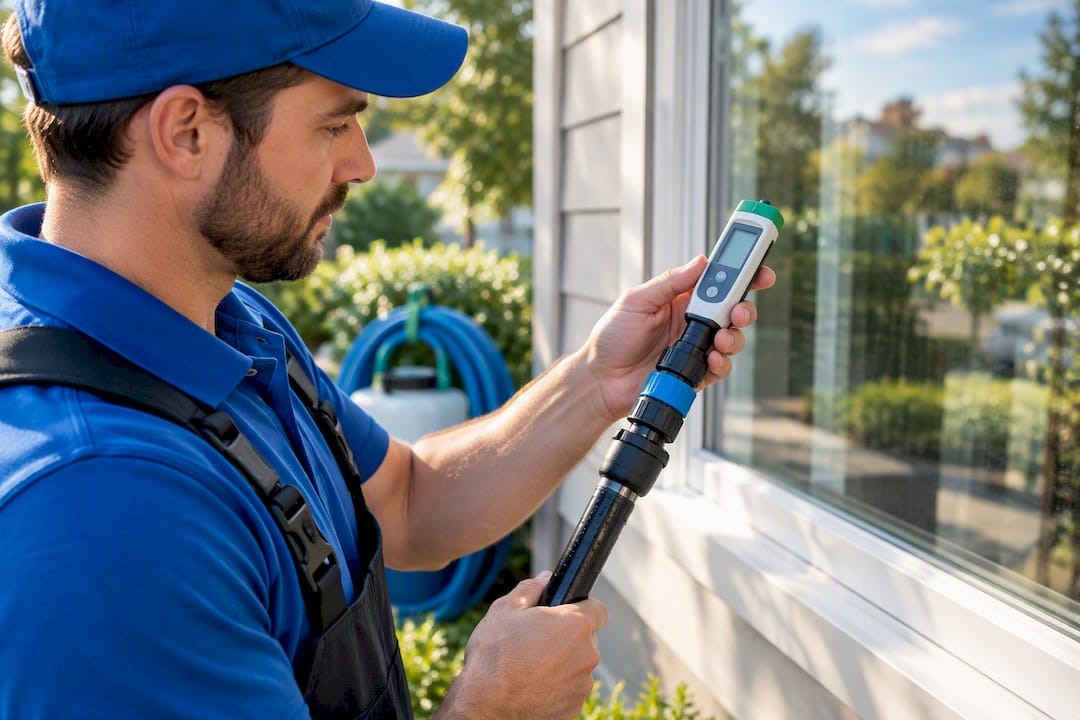
The system is simpler than it looks from the ground. Purified water travels from a tank or purification cart through a hose, up a telescopic pole, and out through a brush head fitted with rinse jets. There’s no soap, no chemical, and no squeegee involved in the core process.
The components break down like this:
- Purification unit — an RO/DI setup that strips dissolved minerals from tap water
- Pump — pushes water through the hose at working pressure
- Telescopic pole — carbon, aluminium, or a hybrid of both, extending from a few feet to 30+ feet
- Brush head — soft bristles with built‑in rinse jets for agitation and final flush
- TDS meter — checks water purity before and during the job
The sequence runs filter, pump, agitate, rinse, air dry. Because the water carries almost no dissolved solids, it evaporates off the glass without leaving the mineral spots you get from tap water or a garden hose. That’s the entire trick behind pure water window cleaning: the brush does the physical scrubbing, and the water’s purity does the finishing work.
A TDS reading near 0 ppm is the standard most professionals aim for, and checking it at the pole tip, not just at the tank, is what actually confirms the water reaching the glass is clean.
Where water-fed poles excel, and where they fall short
Water-fed poles are built for one job really well: exterior glass you can reach from ground level. They’re not a universal answer to every cleaning problem on a property.
What they’re good at:
- Cleaning second and third-storey windows without a ladder
- Leaving glass spot-free without a final squeegee pass
- Hitting frames, sills, and glass in one continuous motion
- Cutting job time significantly on multi-window exteriors
Where they run into trouble:
- Interior glass that can’t be left wet (carpets, hardwood floors, electronics nearby)
- Windows caked in oily residue, old paint, or construction adhesive
- Anything beyond the pole’s practical reach, where rope access or a boom becomes necessary
Reach limit: Pure-water pole systems typically cover exterior glass up to about 65 to 70 feet, roughly six to seven storeys, before access equipment takes over.
Wind is the operational wildcard nobody mentions in the marketing copy. A gusty day makes precise brush control almost impossible above the second storey, and hot glass on a sunny afternoon can flash-dry the water before it rinses the dirt away, leaving faint streaking instead of a clean finish.
How do you choose the right pole and setup?
Sizing starts with a tape measure, not a spec sheet. Measure your highest window, then add a margin for working angle, because you never hold a pole perfectly vertical against a wall. Add roughly one to two metres beyond the literal height, since the pole tilts away from the building as you work and that angle eats into your effective reach.
- Measure and add margin. Take your tallest window’s height, add the working-angle buffer, and that’s your minimum pole length.
- Pick your material. Aluminium is affordable and fine for occasional home use; hybrid poles blend aluminium and carbon for mid-range stiffness; full carbon is lighter and stiffer for anything over 20 feet, which matters once you’re holding it at full extension for an hour.
- Match the purification system to your water. A straightforward DI tank suits light, occasional use; an RO plus DI cart handles higher-volume or harder tap water more efficiently and burns through less resin.
- Check pump specs. Commercial setups commonly run pressure around 8 to 10 bar with flow rates of a few litres per minute, which is the range that keeps brush agitation effective without wasting water.
- Budget by length and filtration, not brand name. Cost climbs with pole length, carbon content, and the filtration capacity of the tank or cart, not with cosmetic features.
A practical buying checklist worth following: measure your highest window and add margin, go hybrid or carbon past 15 feet of reach, confirm the brush has a soft bristle head with working rinse jets, and size your DI tank to your local tap water’s TDS reading rather than guessing.
Pro Tip: Test your tap water’s TDS before you buy a filtration setup. Hard water areas chew through DI resin fast, and knowing your starting number tells you whether an RO stage will save you money long term.
How do you actually use a water-fed pole for streak-free glass?
Reach is only half the equation. Technique determines whether that reach translates into a clean finish or a streaky mess.
- Start with the frames and sills, not the glass. Runoff from a dirty frame will land on freshly rinsed glass below it if you clean the pane first, undoing your work.
- Agitate in overlapping passes. Work the brush across the glass in a pattern, top to bottom or side to side, applying light pressure rather than scrubbing hard.
- Finish with a clean rinse pass. Let the jets flood the surface one final time so no residue or brush marks remain before you pull the pole away.
- Let it air dry. This is the entire point of using purified water. No squeegee, no towel, no streaks, as long as your TDS reading was clean going in.
Avoid working on glass that’s baking in direct afternoon sun. Hot glass dries the water almost instantly, before it’s had a chance to rinse dirt off the surface, and that’s a common cause of streaking that has nothing to do with your technique or your water quality.
What water purification and TDS testing actually matter here?
Reverse osmosis and deionisation solve different problems, and most professional systems use both. RO removes the bulk of dissolved solids by forcing water through a semi-permeable membrane. DI resin then polishes what’s left, pulling out the remaining ions that RO alone tends to miss. Combining the two, RO plus DI, is the standard approach professionals rely on, and it’s why a TDS meter check at the pole tip is the real trust signal, not just a nice-to-have step.
- RO stage — bulk mineral removal, extends resin life downstream
- DI stage — mixed-bed resin for final polishing
- TDS meter — verifies purity at the point of use, not just at the tank
A TDS reading near 0 ppm is the goal, though readings under about 10 ppm are commonly treated as acceptable for reliable air-dry results without spotting.
Resin doesn’t last forever, and that’s the hidden running cost nobody budgets for upfront. Hard water chews through DI resin faster than soft water, so sizing the tank to your local TDS reading and installing a bypass valve cuts down on wasted resin and unnecessary cartridge swaps. Watch your TDS reading climb over successive jobs; that rise is your early warning that the resin needs refreshing.
How do you maintain gear and troubleshoot streaks?
Most problems trace back to one of three things: dirty water, a worn brush, or sloppy technique. Check all three before assuming your gear is broken.
- Inspect hose fittings and pump pressure before each job; a slow leak drops flow without any obvious sign
- Rotate or replace brush bristles once they’ve flattened or lost their bristle spring
- Check pole joints for play at full extension; a wobbly joint makes fine control nearly impossible
- If streaking shows up, test TDS first, then check that rinse jets aren’t clogged, before blaming the water itself
Pro Tip: Keep a small TDS meter in your kit and test before every job, not just occasionally. A resin cartridge can go from perfectly fine to spent within a single afternoon on hard water.
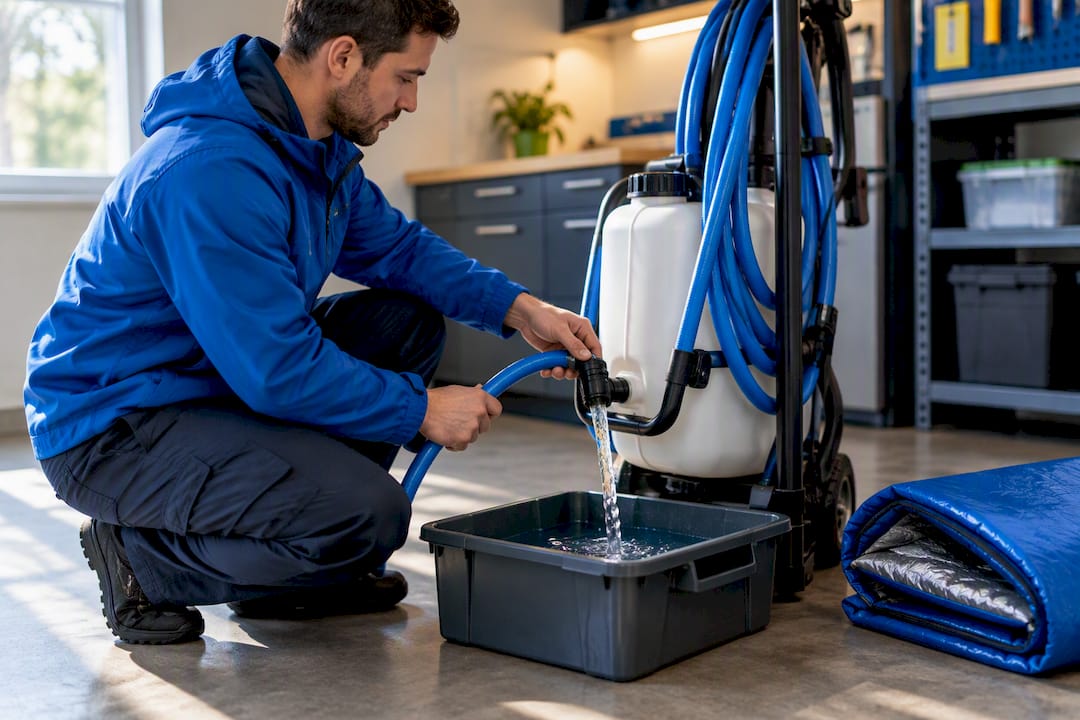
Storage matters more in colder regions. Drain hoses and tanks fully before freezing temperatures hit, since trapped water expands and cracks fittings, pumps, and hose barbs that are otherwise expensive to replace.
When is hiring a professional the smarter move?
DIY water-fed pole work makes sense for a single-storey home with straightforward access and a modest budget. Once you’re dealing with third-storey commercial glass, heavy grease deposits, tight scheduling windows, or property manager liability concerns, a trained crew becomes the more cost-effective option, not just the more convenient one.
Ask any service to show you a live TDS reading at the pole tip before work starts. Confirm their access plan for your tallest windows, check insurance coverage, and get clarity on what’s included versus excluded, particularly around interior glass or heavily soiled surfaces. A crew that hesitates to show you a meter reading is one worth reconsidering.
— Jayce
Book professional window cleaning with Bluebrothers
If measuring pole angles and babysitting DI resin sounds like more hobby than you signed up for, Bluebrothers handles the whole job with technicians and clear, upfront pricing.

A Bluebrothers booking starts with an inspection of your property’s access points and glass condition, followed by a TDS check so you can see the water quality for yourself before work begins. Pricing is discussed upfront, and the scope of the job, exclusions included, is laid out before anyone touches a pole. Bluebrothers also handles air duct cleaning, dryer vent cleaning, and furnace maintenance, so property managers juggling multiple service needs can bundle the work with one reliable provider.
Ready to get your windows done right? Request a quote for window cleaning and find a time that fits your schedule.
FAQ
Do water-fed poles actually work at cleaning windows?
Yes. Combined with purified water tested near 0 ppm TDS, a water-fed pole leaves exterior glass spot-free without a squeegee pass, because the water evaporates without mineral residue instead of leaving streaks behind.
Can you clean windows with a water-fed pole in the rain?
Light rain generally doesn’t ruin the result since the glass has already been rinsed with pure water, but heavy rain right after cleaning can redeposit dirt from nearby surfaces before the glass fully dries. Most professionals avoid scheduling jobs during active downpours.
How much does a water-fed pole cost?
Cost scales with pole length, carbon content, and filtration capacity rather than brand. If you’d rather skip the equipment altogether, Bluebrothers’ window cleaning service has current pricing listed on the site.
What kind of water do pole window cleaners use?
Professionals use purified water treated through RO, DI, or a combination of both, verified with a TDS meter at the pole tip before starting. A reading near zero ppm is the standard target for a spot-free air-dry finish.