For mineral film and coated glass, diluted vinegar is the safer pick. For a heavy greasy film on standard glass, a properly diluted ammonia solution cuts faster, though its fumes are strong and it can harm Low-E or tinted coatings. Whichever you choose, ventilate the room and never mix either product with bleach or other household chemicals.
TL;DR:
- Use one cup of white vinegar per quart of water; the ammonia mix calls for two tablespoons per two quarts of warm water.
- Before using ammonia, check the glass maker’s guidance for coated, tinted, or mirrored windows and windows under warranty; use very dilute vinegar on sensitive coatings.
- Dust glass first, squeegee from top to bottom while wiping the blade after each pull, then buff the edges with a clean, dry microfiber cloth.
- Ventilate the room, wear gloves and goggles, and never mix vinegar or ammonia with bleach or combine vinegar with hydrogen peroxide.
- Call a professional for stubborn hard water scale, windows that are high or unsafe to reach, or coated glass you are unsure how to clean.
Table of Contents
- How do vinegar and ammonia compare for cleaning power and streaks?
- What are the exact recipes and steps for streak-free windows?
- What safety rules apply when cleaning windows with either product?
- Which glass and surfaces should avoid ammonia or vinegar?
- Why do consumer tests and manufacturer guidance seem to disagree?
- Why technique beats chemistry (and when to call a pro)
- Want a professional to handle your windows?
- FAQ
- Sources
How do vinegar and ammonia compare for cleaning power and streaks?
The two cleaners work in opposite ways. Ammonia cuts greasy, oily grime quickly because it has a high vapour pressure and evaporates fast, which can help limit streaking on standard windows. The catch, according to Guardian Glass guidance, is that ammonia can leave a film and may not suit modern coated glass.
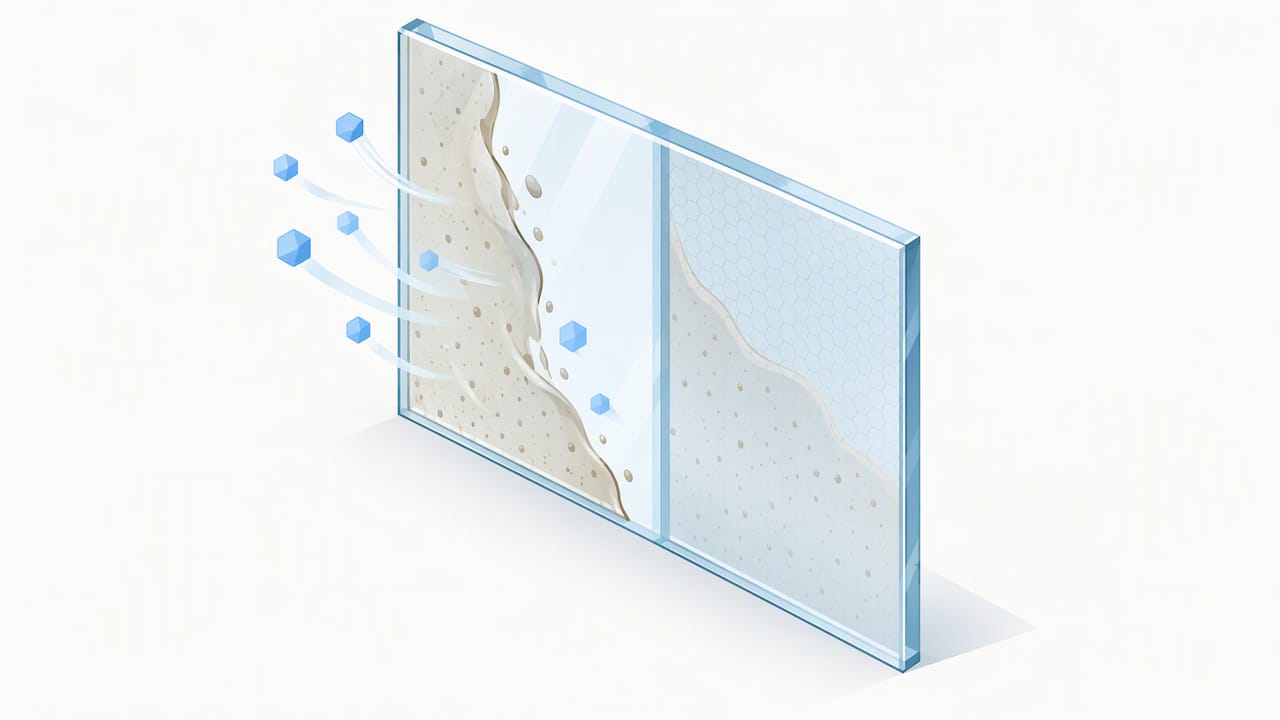
Vinegar relies on acetic acid, which lifts mineral deposits and some films with far less odour. It can take more wiping to finish clean. In independent testing summarized by Consumer Reports via KOMO News, vinegar removed soils but left more visible streaks than some commercial cleaners, while ammonia-based products cleaned well with a strong smell.
Here is how the choice shakes out:
- Greasy kitchen or exterior film on standard glass: diluted ammonia cleans fastest.
- Hard-water spots and mineral haze: vinegar is the better tool.
- Odour sensitivity: vinegar wins, and ammonia-free surfactant cleaners can match ammonia’s power with fewer fumes.
- Coated or Low-E glass: vinegar at a very mild dilution is the safer route.
So pick by soil and glass type, not by a single “best” cleaner.
What are the exact recipes and steps for streak-free windows?
Start with the mix. For vinegar, The Spruce suggests distilled white vinegar with water, plus a small squirt of dish soap only for very dirty exterior glass. Taste of Home lists one cup of vinegar to one quart of water, and 2 tbsp of ammonia to 2 qts of warm water for the ammonia version. Use ammonia only at a concentration approved by the glass manufacturer, per Guardian Sunguard guidance.
Water matters too. If your tap water is hard, distilled water can reduce spotting on the final wipe.
- Dust the frame and glass first so you do not turn grit into mud.
- Spray or mop on your chosen solution, working one pane at a time.
- Squeegee from top to bottom, wiping the blade after each pull.
- Stop just before the glass dries completely, as Pilkington’s technique guidance advises, so a thin film evaporates evenly.
- Buff the edges and corners with a clean, dry microfiber cloth, using an S-shaped motion.
Pro Tip: Use a clean, lint-free microfiber cloth and keep the squeegee blade in good condition to help avoid streaks.
What safety rules apply when cleaning windows with either product?
Both cleaners are household staples, and both become dangerous in the wrong combination. Health Canada warns against mixing ammonia with bleach because it produces toxic chloramine vapours, and against mixing bleach with acidic cleaners such as vinegar.
Incidents of chloramine exposure reported to Canadian poison centres more than doubled in October and November 2020 compared with the same period in 2019, according to Health Canada. Mixing cleaners at home is a common, avoidable cause.
Keep these habits:
- Open windows and run a fan while you work.
- Wear rubber gloves and goggles, and wash your hands afterward, as Health Canada’s household chemical guidance recommends.
- Keep products in their original containers, away from children and pets.
- If you feel light-headed or your eyes sting, get to fresh air and seek immediate emergency care.
- Do not combine hydrogen peroxide and vinegar either: Transport Canada’s CANUTEC notes this makes corrosive peracetic acid.
Which glass and surfaces should avoid ammonia or vinegar?
Coatings are where the real damage happens. Pilkington’s technical bulletin says ammonia- and alcohol-based cleaners can be counterproductive on Low-E coated glass and recommends a very mild vinegar solution for sensitive coatings.
- Low-E and coated windows: skip ammonia; use mild detergent or very dilute vinegar as the manufacturer directs.
- Tinted car windows: check the manufacturer’s cleaning guidance before using ammonia.
- Mirror edges and stovetop glass: ammonia may be too strong, per Taste of Home.
- Windows under warranty: check the maker’s cleaning bulletin first, because harsh products may affect coverage.
When in doubt, a quick test on a corner or a call to the manufacturer beats a ruined coating.
Why do consumer tests and manufacturer guidance seem to disagree?
Testers judge what they can see: streaks, shine and smell. Manufacturers protect coatings that must last for decades. Both can be right. Some ammonia-based and foam products score well in consumer tests, and the New York Times road test praised an ammonia-free foam for staying put on the glass while noting ammonia brands evaporated fast and smelled overpowering.
Match the cleaner to the soil and the glass, follow the manufacturer’s guidance first, and ventilate every time.
For stubborn scale or coated glass you worry about, a professional is a reasonable call.
Why technique beats chemistry (and when to call a pro)
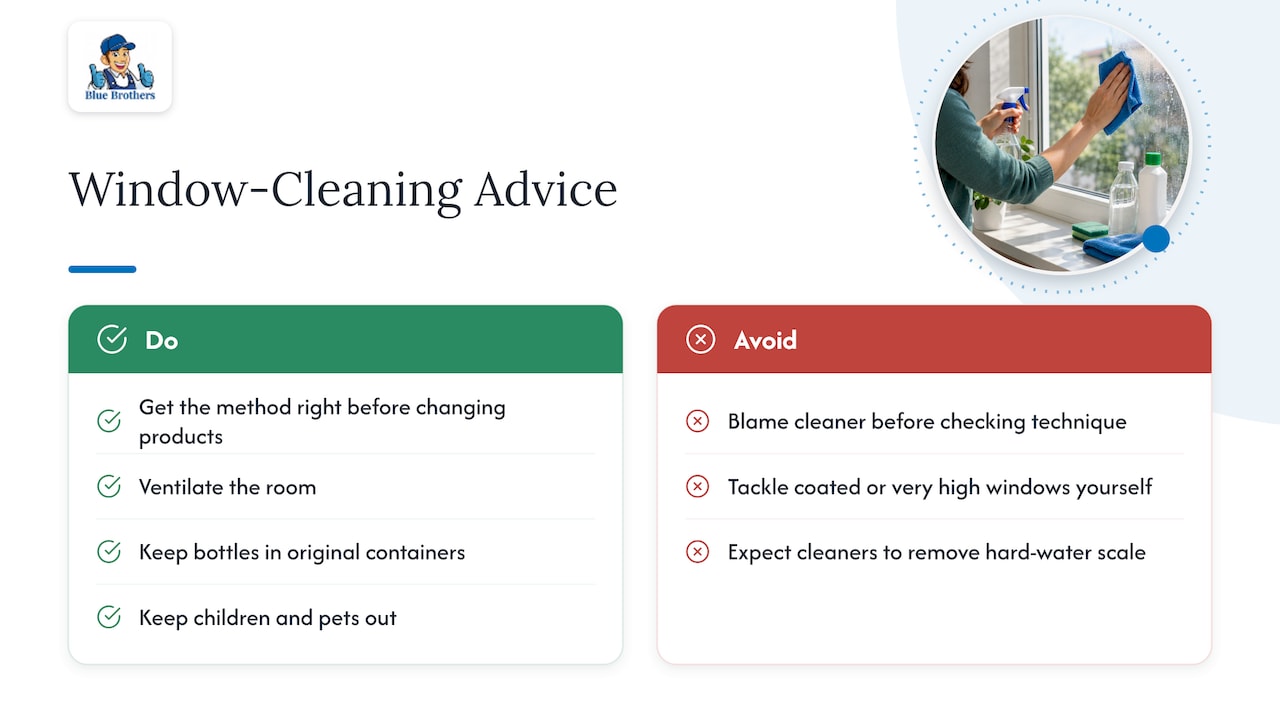
Most streaks I see people blame on the cleaner come from a dirty cloth, a nicked squeegee or wiping at the wrong moment. Pilkington’s guidance backs this: streaking is often a technique problem, so get the method right before you swap products.
Set realistic expectations, too. Neither vinegar nor ammonia is guaranteed to remove stubborn hard-water scale. When windows are coated, very high or heavily scaled, a professional visit saves time and avoids damage. Whatever you use, ventilate, keep bottles in their original containers, and keep children and pets out of the room.
— Jayce
Want a professional to handle your windows?
We clean windows and bring the right tools for the job instead of leaving you with a ladder and a bucket. Our window cleaning service cleans glass.

Consider booking us when:
- Hard-water scale has built up beyond what vinegar will lift.
- Windows are high or hard to reach safely.
- Your glass is coated or tinted and you would rather not risk a DIY mix.
To get a quote, have your window count, access details and any known coatings ready, then request a quote on our residential page and we will take it from there.
FAQ
Can you mix vinegar and window cleaner?
It is best not to. Commercial cleaners may contain ammonia, and mixing ammonia with acids or bleach can release harmful vapours. Use one product at a time, and do not combine cleaning products.
What shouldn’t you clean with white vinegar?
Avoid vinegar on natural stone and on any surface where the manufacturer warns against acids. Never combine it with bleach, as Health Canada warns. On coated glass, keep it very dilute.
Does ammonia and water clean windows?
Yes, a diluted ammonia and warm water mix cuts greasy film well on standard glass. Keep it weak, ventilate the room and skip it on Low-E, tinted or mirrored surfaces.
What are some tips for cleaning windows without leaving streaks?
Dust first, work top to bottom with a clean squeegee, and stop wiping just before the glass dries. Finish with a dry, lint-free microfiber cloth, and avoid cleaning in direct sun.
Sources
- Reduce your risk from toxic gases: Never mix bleach with other cleaning products – Canada.ca
- Guardianglass
- The best window and glass cleaners for a streak-free sparkle