For heavy frying and high heat, baffle filters are generally the better choice because they shed grease faster and tolerate delayed cleaning. For typical home cooking, mesh filters can work well if you wash them weekly. Either way, check your hood’s listing and manufacturer instructions before swapping filter types.
TL;DR:
- Mesh filters suit occasional cooking if you wash them weekly; trapped grease can clog openings, weaken extraction, and strain the fan.
- Baffle filters drain grease into a cup and clean more easily; use a dishwasher only when the manual permits it, and empty collection points regularly.
- Mesh filters may need replacement sooner than baffles, depending on material and condition; check the hood manual for guidance specific to your model.
- Check the hood listing and fan capacity before swapping filters: recirculating hoods need tested assemblies, while commercial kitchens require listed equipment meeting local code.
- Weak extraction after cleaning, lingering smoke or odors, or grease inside ducts can signal buildup beyond the filter and warrant professional inspection.
Table of Contents
- How baffle and mesh filters capture grease
- Baffle vs mesh filters: a side-by-side comparison
- Which filter fits your kitchen and cooking style?
- Why hood type and safety listings limit your filter choice
- Keeping your filter and hood working properly
- What years of hood inspections teach you about filter choice
- Professional hood cleaning when filters aren’t enough
- FAQ
- Sources
- Standards and guidance worth consulting
How baffle and mesh filters capture grease
Baffle filters force air to change direction sharply as it passes through a series of overlapping metal channels. Grease droplets are heavier than air, so they cannot follow the turn, and they collide with the channel walls and drain down into a collection area instead of travelling into the duct.
Mesh filters work differently. Air passes through several layers of woven or pleated metal screen, and grease particles get caught in the fibres as they try to squeeze through the gaps.
- Baffle filters rely on directional airflow changes to separate grease from air.
- Mesh filters rely on physical trapping within layered screen material.
- Both designs reduce airflow somewhat, a factor known as pressure drop, which matters as much as raw grease capture.
A filter that captures more grease in a lab test can still underperform once installed, if it creates too much resistance and the fan cannot maintain the airflow the hood was designed for.
Baffle vs mesh filters: a side-by-side comparison
The two filter types diverge most clearly once you look past a single capture number and consider how each behaves over weeks of real cooking.
Grease capture in daily use favours baffles for heavy cooking: grease slides off the channels and into a cup or tunnel rather than building up on the filter surface. Mesh filters trap grease between their layers, which works fine at first but means the material itself gets progressively dirtier rather than shedding what it catches.
That difference carries straight through to clogging. A loaded baffle filter tends to preserve airflow because grease drains away instead of blocking openings. A neglected mesh filter does the opposite: grease fills the gaps between fibres, extraction drops, and the fan has to work harder for less result.
Maintenance follows the same pattern. Baffles are usually rigid and smooth, so soaking in hot, soapy water or running them through the top rack of a dishwasher (when the manual allows it) gets them clean quickly. Mesh filters need more frequent attention: grease worked into multiple layers resists easy rinsing, and aluminum mesh can discolour or warp under aggressive scrubbing or a hot dishwasher cycle it was never designed for.
- Baffle filters: easier to degrease, generally more dishwasher-tolerant, longer service life before replacement.
- Mesh filters: lighter and often cheaper to buy initially, but need washing more often and may need replacing sooner depending on material and condition.
Durability and fire tolerance round out the picture. Solid metal baffles hold up better under high heat from a grease fire, which is one reason they show up more often in commercial and high-end hoods, where micromesh filters are compared against baffle designs and baffles are noted for resisting airflow loss as they load up with grease.
On cost, mesh usually wins upfront. Over time, though, baffle filters’ durability and easier cleaning can offset the higher purchase price, especially for anyone cooking with oil regularly.
Which filter fits your kitchen and cooking style?
Match the filter to how you actually cook, not to whichever option looks cheaper on a shelf. Run through this before you buy:
- How often do you fry, sear, or wok-cook at high heat.
- Is your hood ducted to the outside or recirculating back into the room.
- Does the filter manual confirm dishwasher compatibility, or does it require hand washing.
- Are you willing to clean the filter weekly, or do you need something that tolerates a longer gap.
- What’s your budget for the filter itself versus the cleaning supplies and time it demands.
Heavy wok or fry cooking points toward baffle filters almost every time: they handle grease volume better and forgive a missed cleaning cycle. Occasional home cooking, like the odd pan-seared dinner a few nights a week, can be well served by mesh, provided you commit to washing it on a regular schedule rather than waiting until airflow noticeably drops.
Call in a professional when you suspect a pressure-drop problem (the hood sounds strained or extraction feels weak even with a clean filter), when you’re not sure your hood’s listing supports the filter you want to install, or when you’re running a commercial kitchen and need the installation to meet code.
Pro Tip: If you’re retrofitting an older hood, confirm the replacement filter’s dimensions and airflow rating match the original before you buy, not after.
Why hood type and safety listings limit your filter choice
A range hood, its filter, and its fan are tested and sold as a system, not as interchangeable parts. This matters most with recirculating hoods, which filter and return air to the kitchen rather than vent it outside.
- Recirculating hoods are evaluated as complete assemblies, and UL’s recirculating-system guidance describes emissions testing performed on the full hood, filter, and appliance combination rather than on a filter alone.
- NFPA 96 governs commercial cooking exhaust systems and grease-removal devices, covering design, installation, operation, inspection, and maintenance for commercial kitchens.
- Commercial kitchens need listed, code-compliant assemblies specified by the hood designer and the local authority having jurisdiction, not a filter swapped in because it seemed similar.
Swapping a mesh filter for a baffle, or the reverse, without checking face velocity and fan capacity can reduce how well the system captures grease, even if the new filter performs better on its own. In a recirculating hood, changing the filter can invalidate the tested configuration entirely.
Keeping your filter and hood working properly
Cleaning instructions vary by model, so the manufacturer manual is the first thing to check, not a general rule of thumb.
- Follow the exact cleaning method the manual specifies: some baffle filters call for regular washing in warm, soapy water, while others permit the dishwasher’s top rack only.
- Empty and drain grease cups and oil tunnels on a regular schedule so they don’t overflow onto the hood or surrounding cabinetry.
- Wipe down the hood surfaces and fan area near the filter, since grease migrates beyond the filter itself over time.
- Watch for signs that cleaning the filter isn’t enough: persistently weak extraction, visible grease buildup inside ducts, or smoke and odour lingering even after the filter is spotless.
Pro Tip: Wear gloves when handling baffle filters: the metal edges on some models are sharp enough to nick bare hands during cleaning.
Those warning signs usually point to a buildup problem further down the duct, which is where a professional grease exhaust and hood cleaning visit earns its keep over another round of filter scrubbing. If you’re watching for the same red flags a commercial kitchen would, a partner guide on kitchen exhaust cleaning indicators covers similar signals worth checking.
What years of hood inspections teach you about filter choice
A premium baffle filter won’t fix a poorly designed hood or ducts that haven’t been cleaned in years. The filter is one part of a system, and neglecting the rest undoes whatever advantage the filter type offers.
A common mistake is treating mesh as maintenance-free because it looks simple, then being surprised when extraction drops. Another is swapping filter types without checking whether the hood’s fan and listing still support the new configuration.
For commercial kitchens, following NFPA 96 compliance schedules and keeping records of professional cleanings matters more than which filter sits in the hood.
— Jayce
Professional hood cleaning when filters aren’t enough
Washing a filter only gets you so far once grease has worked its way into ducts, grease cups, and hood surfaces you can’t easily reach. We handle grease exhaust and hood cleaning for homes and commercial kitchens, including inspecting your hood’s listing and advising on whether your current filter choice still matches it.

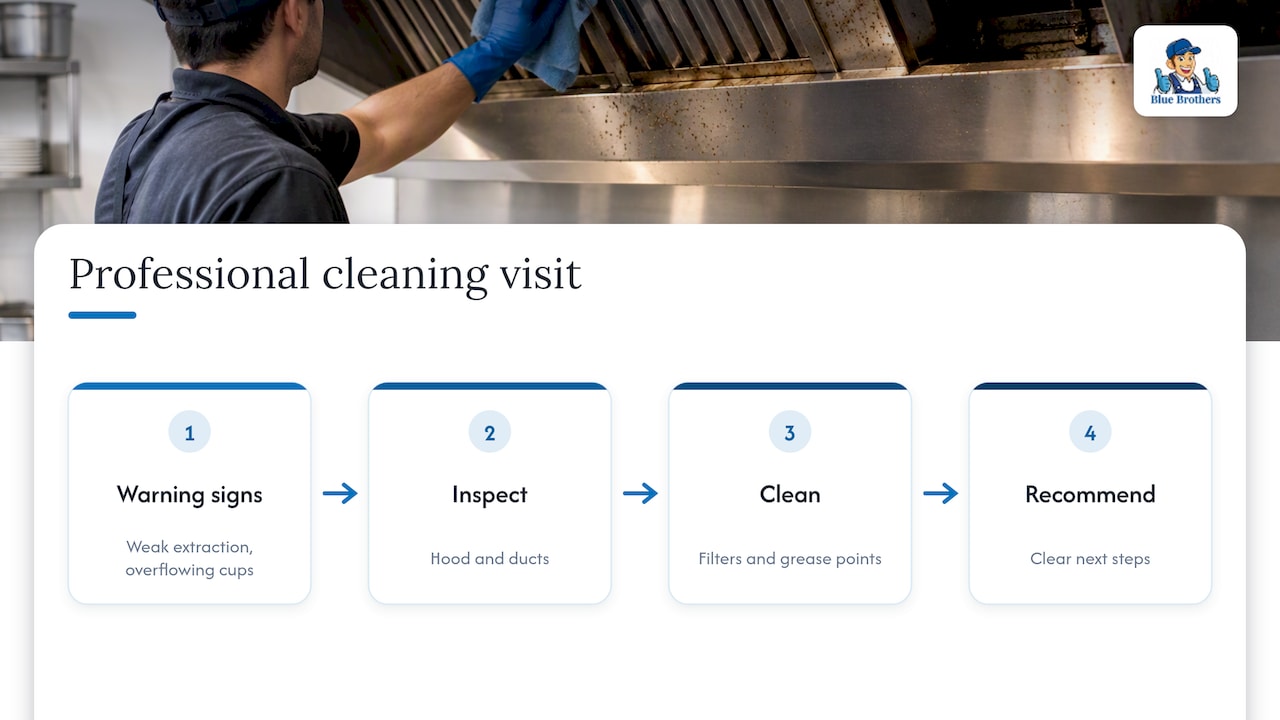
Book us when grease cups keep overflowing between cleanings, extraction feels weak even after you’ve washed the filter, or you’re running a commercial kitchen that needs documented cleaning for compliance. A typical visit includes inspecting the hood and ducts, cleaning filters and grease collection points, and leaving you with clear recommendations rather than guesswork.
If your filter and hood check out fine but you’re noticing dust or odours elsewhere in the home, our residential duct cleaning service covers the rest of the system. Get in touch to book an inspection or request a quote.
FAQ
Which filter is best in chimneys?
Baffle filters generally perform better in kitchen chimneys and range hoods used for heavy or frequent frying, since they shed grease instead of trapping it and hold up well under high heat. Mesh filters can suit chimneys used for lighter, occasional cooking as long as they’re washed regularly.
Are you supposed to replace range hood filters?
Baffle filters are usually cleaned and reused for years rather than replaced, while mesh filters may need periodic replacement depending on the material and how well they clean up over time. Check your hood’s manual for the manufacturer’s specific replacement guidance.
What are the three types of air filters?
Range hood and kitchen exhaust filters include baffle, mesh, and charcoal or carbon filters. Charcoal or carbon filters are used mainly in recirculating hoods to absorb odour rather than grease. Each type suits different hood designs and cooking habits.
What does baffle filter mean?
A baffle filter is a grease filter made of overlapping metal channels that force air to change direction sharply, causing grease droplets to separate from the airflow and drain into a collection area. This design is common in commercial kitchens and hoods used for heavy cooking.
Sources
Standards and guidance worth consulting
For detail beyond this comparison, NFPA 96 covers commercial cooking exhaust system requirements, and UL’s recirculating-system guidance explains how ductless hoods are tested as complete assemblies. Your hood manufacturer’s manual remains the first authority on filter compatibility for your specific model.