Air purifiers with HEPA filters are the right first move for airborne problems like pollen, dust, and smoke in rooms where you spend time. Duct cleaning is the right move when the problem lives inside the ductwork itself: visible debris at the vents, a musty smell that won’t quit, or a known history of moisture or pests. Neither one touches gases like carbon monoxide, and some homes genuinely need both.
TL;DR:
- Duct cleaning is most effective when visible debris, odours, or moisture/pest issues clearly indicate contamination inside the ducts.
- HEPA air purifiers treat airborne particles in specific rooms but do not remove gaseous pollutants like carbon monoxide or volatile organic compounds.
- Professional duct cleaning must include HEPA-filtered vacuum extraction vented outside and a detailed inspection report to ensure proper and safe service.
- Combining duct cleaning with portable HEPA filters can address persistent allergies or odours, especially when both indoor and duct issues coexist.
- Indoor air quality improvements also depend on source control and ventilation, as filtration alone cannot resolve all airborne pollutants.
Table of Contents
- What duct cleaning actually does and what problems it solves
- What air purifiers and in-duct filters do, and where they stop working
- When duct cleaning makes more sense, and when a purifier is the right first step
- Cost, convenience, and long-term value
- Using both: when a combined approach makes sense
- What good duct-cleaning service actually looks like
- A practical take on where to start
- How we can help with duct and vent cleaning
- FAQ
- Sources
What duct cleaning actually does and what problems it solves
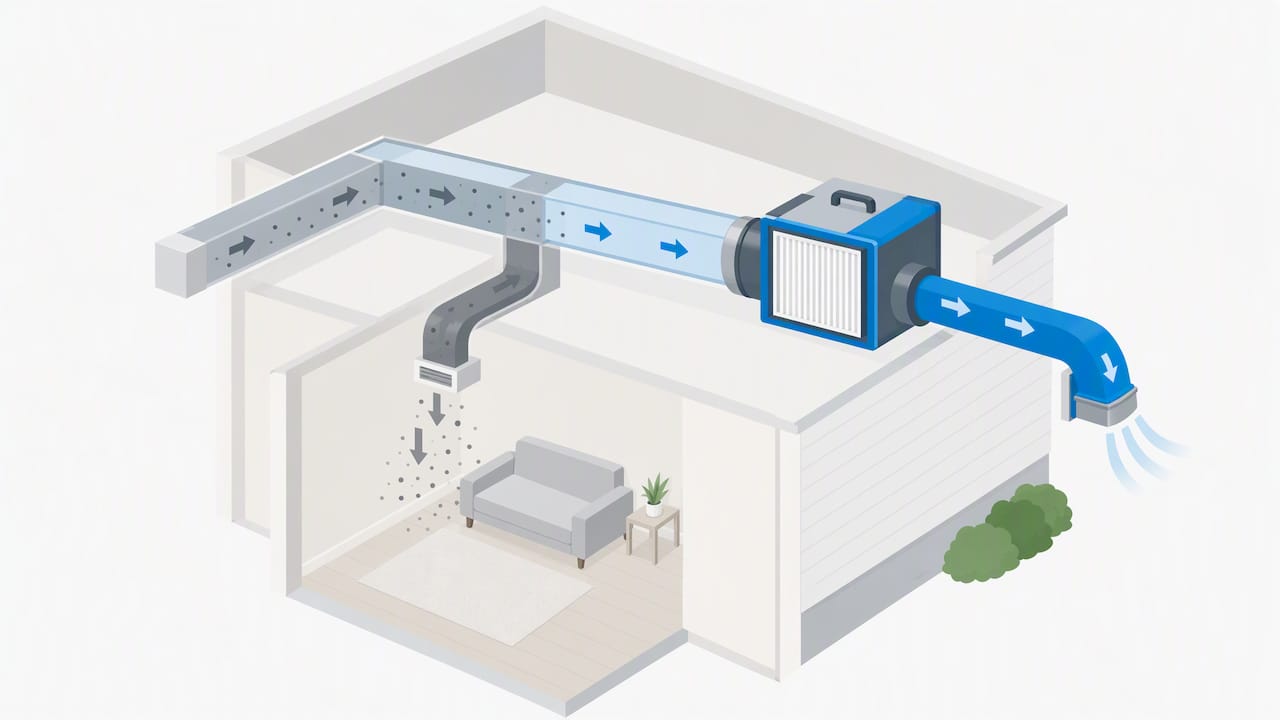
Professional duct cleaning targets the surfaces inside your supply and return ducts, the registers, and components inside the furnace cabinet. Technicians use mechanical agitation (brushes, air whips) combined with HEPA-filtered vacuum extraction that vents to the outside, pulling loosened debris out of the system instead of just stirring it around.
Ducts are likely the actual problem when you see one or more of these signs:
- Visible dust or debris blowing out of registers when the system starts
- A persistent musty or rotten smell that tracks with the HVAC running
- A known history of moisture intrusion, rodents, or insects in the ductwork
- Heavy construction dust from a recent renovation that settled into the supply lines
Done properly, duct cleaning can improve airflow and reduce large debris buildup, and when coils or ducts were badly obstructed, some homeowners see a modest efficiency gain. It is not a guaranteed fix for allergy symptoms or general air quality. A testing protocol from the National Research Council found that duct cleaning activities can temporarily raise airborne particle concentrations unless the crew uses proper containment and HEPA extraction throughout the job.
Pro Tip: Before booking, ask whether the crew uses HEPA-filtered vacuums that exhaust outside the home, not just a shop vac that recirculates dust back into your rooms.
What air purifiers and in-duct filters do, and where they stop working
A HEPA air purifier pulls air through a dense filter that traps fine particulates: pollen, dust, pet dander, smoke particles, and many of the airborne particles tied to respiratory irritation. Portable units treat the air in one room, while upgrading your furnace’s in-duct filter treats whatever air is actively circulating through the system.
A few practical notes on getting value from one:
- Match the unit’s clean air delivery rate (CADR) to the square footage of the room, not the whole house
- Place portable units in the rooms you actually occupy most, bedrooms and living areas first
- Replace filters on the manufacturer’s schedule, since a clogged filter stops cleaning air effectively
- Skip any device marketed as an ioniser or ozone generator for air cleaning
Health Canada’s guidance for indoor air quality professionals recommends reducing pollutant sources and improving ventilation first, then adding HEPA portable units in the rooms where people spend the most time. The same guidance warns that some air cleaning devices generate ozone or other by-products that can make air quality worse rather than better, so checking for independent safety testing before buying matters.
The limitation that trips people up most: no HEPA filter, in a portable unit or inside your ductwork, removes gaseous pollutants like carbon monoxide or many volatile organic compounds. Health Canada’s office building guidance is explicit that filtration handles particles, not gases. A home with a combustion appliance still needs a working CO detector regardless of what filtration is installed.
When duct cleaning makes more sense, and when a purifier is the right first step
Match the symptom to the likely cause before you spend money on either option.
- Visible dust or debris blowing from registers: points to contaminated ductwork, duct cleaning is the direct fix.
- Seasonal allergy symptoms that spike indoors, especially during pollen season: points to airborne particles, start with a HEPA purifier in the bedroom and main living space.
- Persistent musty or mouldy smell tied to the HVAC running: suggests moisture inside the ducts, book an inspection before cleaning, since hidden mould may need remediation rather than a standard cleaning.
- Heavy dust settling everywhere after a renovation: both help, a purifier for immediate relief while you wait for a scheduled duct cleaning to remove embedded construction debris.
- Wildfire smoke infiltrating the home: a portable HEPA unit sized to your main rooms is the faster, more direct response.
Households with young children, older adults, or anyone managing asthma should treat persistent odour or visible mould as urgent and call a technician for an inspection rather than guessing. When moisture or structural damage is suspected, a seasonal home maintenance guide covers the kind of moisture control that prevents duct contamination from recurring.
Cost, convenience, and long-term value
A professional duct cleaning is a one-time job, typically scheduled every few years or after a renovation, while a HEPA purifier is an ongoing cost spread across filter replacements and electricity. Weigh the shape of the expense, not just the sticker price.
- Duct cleaning: one upfront service fee, infrequent, addresses a specific contamination problem rather than ongoing exposure
- Portable HEPA units: lower upfront cost per unit, but filters need regular replacement, and electricity runs continuously if used around the clock
- Furnace and coil cleaning: complements both approaches by keeping the system itself from reintroducing dust and reducing strain on the blower motor
- Dryer vent cleaning: a separate but related job that reduces lint buildup and lowers fire risk, worth scheduling on its own cycle
Non-monetary value matters too: odour elimination, reduced allergy flare-ups, and lower fire risk from a clogged dryer vent don’t show up on an air quality meter but affect daily comfort. If you want to confirm whether an investment actually worked, a simple before-and-after visual inspection of the vents, or noting whether symptoms improve over a few weeks, tells you more than guessing.
Using both: when a combined approach makes sense
Some homes genuinely need both interventions working together, particularly when ductwork contamination overlaps with an ongoing particle source like wildfire smoke season or persistent pet dander.
A sensible sequence looks like this:
- Get an inspection first to identify whether the issue is duct-resident, airborne, or both
- Fix the root cause, a moisture leak, a pest entry point, or a ventilation gap, before any cleaning
- Schedule targeted duct cleaning only where contamination is confirmed
- Add HEPA filtration, either a higher-rated furnace filter (up to what your system supports) or a portable unit, for ongoing airborne control
HRV and ERV systems typically include filters designed mainly to protect the equipment rather than capture fine particles, so they need separate attention; guidance on ventilation and the indoor environment notes these filters require vacuuming or washing every few months to keep airflow steady.
Pro Tip: If you suspect mould, gas leaks, or structural moisture damage, bring in a specialist for remediation before scheduling any routine cleaning, since cleaning over an unresolved problem just delays the real fix.
What good duct-cleaning service actually looks like
A proper job starts with an inspection, not a sales pitch. Expect a written assessment of what the technician found, HEPA-contained vacuum extraction vented outside, and documentation of the work completed, ideally with before-and-after photos.
Before booking, ask a provider:
- Do you use HEPA-filtered vacuums that exhaust outside the home?
- Do you apply biocides or chemical treatments, and can you provide safety documentation for them?
- Will you give me a written report or photos of the ducts before and after?
Red flags to walk away from: no inspection offered, pressure to apply chemical treatments without explanation, or no documentation at all. A look at how dirty ducts affect indoor health covers the health-related signs worth raising with a technician during that inspection.
A practical take on where to start
Start with source control and targeted filtration, since that’s what fixes most everyday air quality complaints cheaply and quickly. Reserve professional duct work for the cases where the evidence clearly points inside the ductwork: visible debris, odour, or a documented moisture or pest history. Skip the cleaning if nothing points there.
— Jayce
How we can help with duct and vent cleaning
If an inspection points to contaminated ductwork, we handle air duct cleaning with HEPA-contained extraction and a written report, so you know exactly what was found and removed, without guesswork about whether the job was done properly.
We also cover the jobs that often go with it:
- Dryer vent cleaning to clear lint buildup and reduce fire risk
- HRV cleaning to keep ventilation filters working as intended
- Furnace cleaning to stop the system from reintroducing dust after service
We serve homes and businesses across multiple regions, with support for emergency requests. Request a free quote and we’ll start with an inspection before recommending any service.
FAQ
What are the downsides of duct cleaning?
Done poorly, duct cleaning can temporarily raise airborne particle levels if the crew skips proper HEPA containment, according to National Research Council testing. Providers who apply biocides without disclosing them or documenting safety data sheets add an avoidable risk, so ask about both before booking.
Is there a downside to using an air purifier?
Portable HEPA units only clean the room they’re placed in and do nothing for gaseous pollutants like carbon monoxide, per Health Canada’s guidance. Ongoing filter replacement and electricity use also add a ongoing cost that a one-time duct cleaning doesn’t carry.
Is duct cleaning a sham?
No, but it’s not a universal fix either. It solves a specific problem, contaminated ductwork, and delivers little benefit in a home without visible debris, odour, or a moisture or pest history pointing to the ducts themselves.
Will cleaning my air ducts make my house less dusty?
It can, when the dust was actually coming from inside the ductwork, such as after a renovation or with a long-neglected system. If your dust is airborne from daily activity or pets rather than duct-resident, a HEPA purifier placed in your main living spaces will likely make more noticeable difference.
Sources
- Canada
- Testing effectiveness of duct cleaning and its impact on airborne particles, mold and biocide levels in commercial office buildings