Yes, mice can get into your air ducts, and once they do, shutting off your HVAC system is the first move that actually matters. Don’t vacuum or sweep any droppings you find. That aerosolizes contaminants and pushes them further into your home. For anything beyond a few visible droppings near a register, professional duct cleaning and sanitization is the safer bet over DIY.
TL;DR:
- Sealing gaps around vent covers, electrical lines, and duct joints is essential to prevent future mouse entry.
- Professional duct cleaning and sanitization are recommended if droppings or nests are inside the ductwork, especially beyond visible outlets.
- Traps placed near entry points and along known runways, combined with sealing, are effective for controlling active infestations.
- Handling contamination with disinfectant and avoiding dry vacuuming reduces aerosolized pathogens and spreads of illness.
- Routine HVAC inspections and sealing maintenance help prevent re-infestation and keep rodents out long-term.
Table of Contents
- Signs mice are in your vents or ductwork
- How do mice get into duct systems?
- What should you do right now if you suspect mice?
- Should you trap or poison mice found in ducts?
- Cleaning and sanitizing ducts after mice are removed
- How do you rodent-proof ducts and vents for good?
- What does a qualified duct-cleaning company actually do?
- Quick perspective: when to stop DIY and call a pro
- Get your ducts inspected and sealed properly
- Sources
- FAQ
Signs mice are in your vents or ductwork
Sound is usually the first clue. Light, continuous scratching at night, especially right after the furnace kicks on, tends to point to mice rather than something bigger. Heavier thumping, dragging noises, or sounds that seem to travel a long distance through the ductwork often mean rats instead, which changes how you respond.
Beyond sound, watch for:
- A persistent musty or ammonia-like odour coming from vents
- Small dark droppings around registers or on the floor beneath them
- Shredded insulation, fabric, or paper near duct openings
- Uneven airflow or a vent that suddenly blows weaker than the others
Statistic to know: rodent-borne pathogens like hantavirus spread through inhaling aerosolized excreta, which is exactly why the CDC and Mayo Clinic warn against dry cleanup methods. You can safely peek into an accessible register with a flashlight, but anything deeper in the trunk line calls for a camera inspection, not your bare eyes and hands.
How do mice get into duct systems?
Mice don’t need much of a gap. An opening as small as a very narrow gap—smaller than most people assume—is enough for one to squeeze through. That’s smaller than most people assume, and it’s why sealing work has to be thorough rather than spot-checked.
Common weak points include:
- Vent covers that are dented, warped, or missing a screw
- Gaps where plumbing or electrical lines pass through exterior walls near ductwork
- Duct sections that have come loose or disconnected at a joint
- Roof penetrations, soffit vents, and attic openings that connect to the duct run
Ducts appeal to mice because they’re warm, dark, and quiet, and they double as a highway between food sources and shelter, which is exactly why mice travel through vents once they find a way in. Check attics, crawlspaces, and every exterior vent hood for gaps, and don’t skip the spots where new wiring or a satellite dish install might have left a hole unpatched.
What should you do right now if you suspect mice?
Act in this order:
- Shut off the HVAC system at the thermostat or breaker to stop air circulation.
- Leave droppings, nesting material, or carcasses untouched. Do not vacuum or dry sweep.
- Put on an N95 respirator, disposable gloves, and eye protection before approaching any visible contamination.
- Damp wipe visible deposits on hard surfaces using a disinfectant, then dispose of paper towels in a sealed bag.
- Keep kids, pets, and anyone with asthma or a compromised immune system out of the affected room until it’s cleared.
- Open a window if weather allows, but don’t run a fan that pulls air through the contaminated duct section.
Pro Tip: If you can smell rodent odour but can’t see the source, don’t chase it with a flashlight and a coat hanger. That’s usually a sign the nest is deeper in the trunk line, and disturbing it without containment just spreads contaminated dust into the room.
Call a professional immediately if you find droppings inside the ductwork itself rather than just near a register, or if anyone in the home develops flu-like symptoms after exposure.
Should you trap or poison mice found in ducts?
Skip the poison. A mouse that dies from bait almost always dies somewhere you can’t reach, and a carcass rotting inside a duct run creates an odour problem that can take weeks to track down and cost more to fix than the original infestation.
Traps work, but placement is everything:
- Set traps along runways in the attic or crawlspace, not inside the ductwork
- Position traps near exterior vent openings where mice are entering, not exiting
- Check traps daily so carcasses don’t sit and decompose
- Pair every trap with sealing work, since removing mice without closing entry points just invites the next ones in
Homeowners who trap without sealing gaps almost always see the problem return within a season. If access to the nest requires cutting into ductwork or you’re dealing with a heavy infestation, hiring a pest control professional for humane, comprehensive removal is worth the cost over a DIY approach that drags on for months.
Pro Tip: Never place a trap directly inside a duct, even a large one. A trapped, decomposing rodent in an inaccessible section is one of the most common reasons homeowners end up needing emergency duct cleaning.
Cleaning and sanitizing ducts after mice are removed
Once the mice are gone, the contamination isn’t automatically gone with them. Droppings, urine, and nesting material can sit in ductwork for a long time, and disturbing them the wrong way is worse than leaving them alone temporarily.
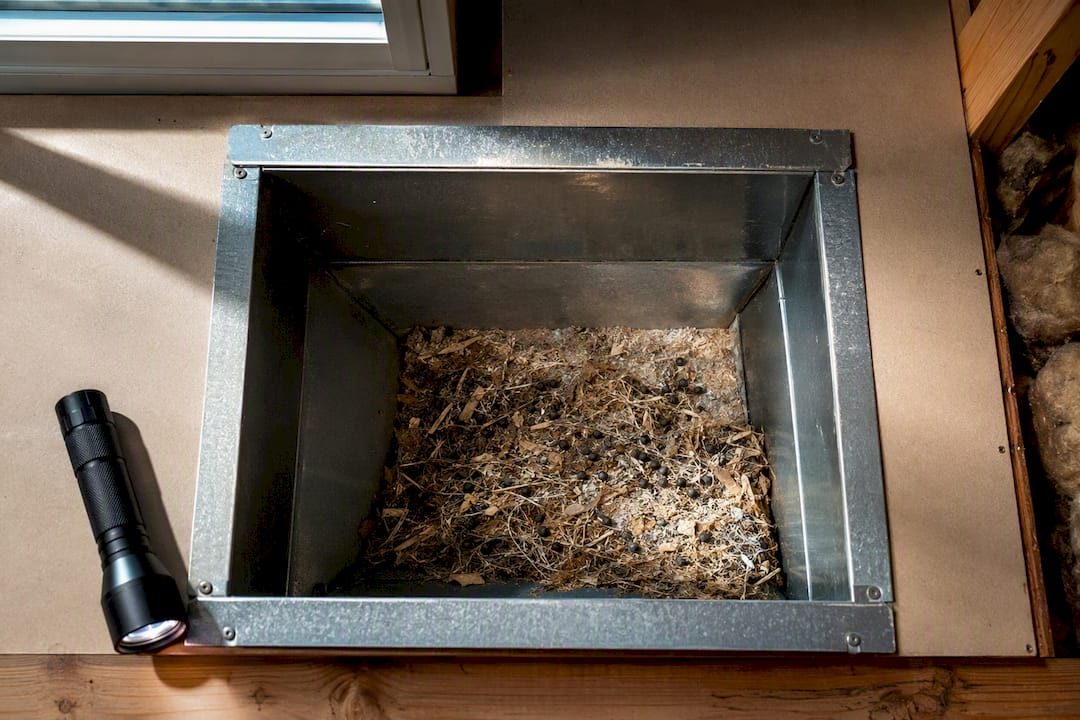
For small, visible spots near a register, damp cleaning with disinfectant works fine. Never dry-vacuum or sweep. That’s the single biggest mistake homeowners make, since it aerosolizes exactly the particles you’re trying to remove.
Call in professional duct cleaning when you notice:
- A nest built inside the ductwork itself, not just near an opening
- Odour that persists after surface cleaning
- A dead rodent you can’t physically reach
- Contamination spread across multiple duct runs rather than one register
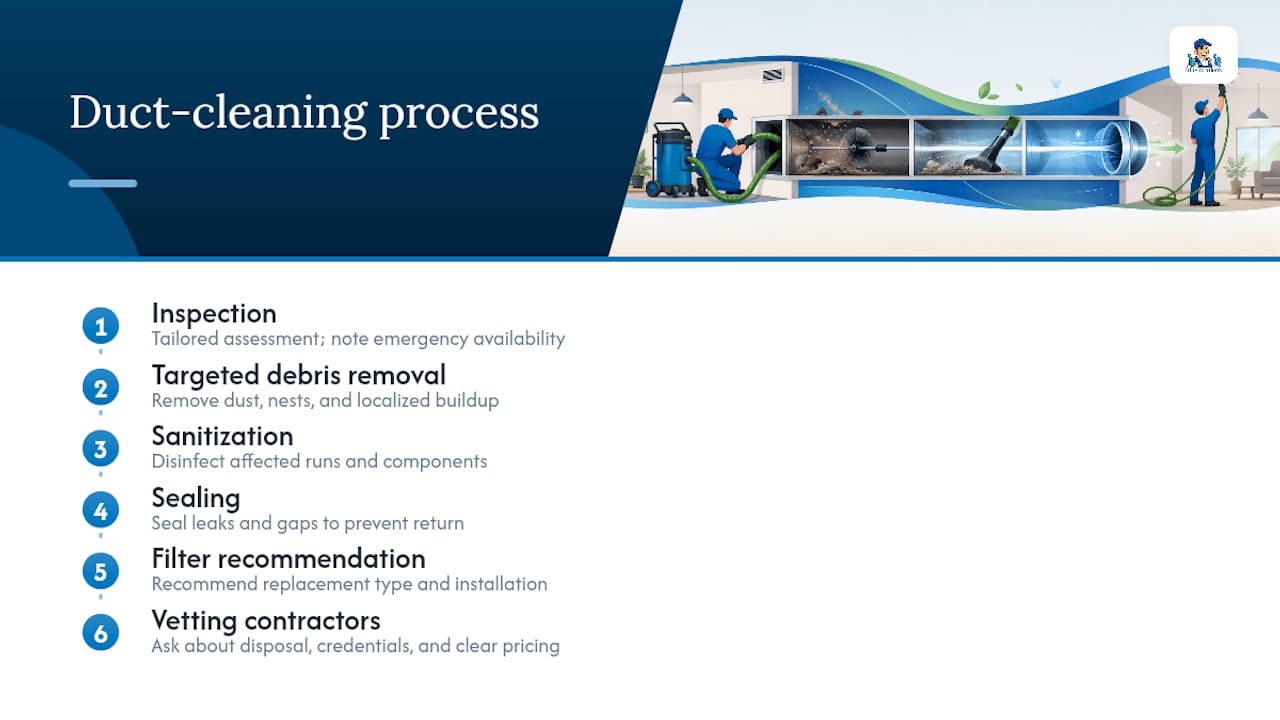
A proper professional job typically includes a full inspection, targeted debris removal from the affected sections, sanitization treatment, resealing of any disturbed joints, and a filter change. Pathogens and allergens tied to rodent contamination can affect indoor air quality well after the visible mess is gone, which is the real argument for sanitization rather than just a wipe-down.
How do you rodent-proof ducts and vents for good?
Sealing is the part homeowners skip, and it’s the part that actually stops reinfestation.
- Seal any gap a quarter inch or wider using metal mesh, steel wool packed with caulk, or a sheet-metal collar around pipe penetrations.
- Replace bent or missing vent covers, and add an external screen over exterior vent hoods.
- Check attic and crawlspace access points seasonally, and keep stored items off the floor so nests are easier to spot.
- Remove attractants: sealed food storage, no pet food left out overnight, and tidy insulation that doesn’t offer nesting material.
- Book a routine HVAC inspection annually. Technicians who service the system regularly are the ones who catch a chewed wire or a loose duct joint before it becomes an entry point.
Pro Tip: Steel wool alone degrades over time. Pair it with caulk or expanding foam so the seal holds through a full winter, not just the first cold snap.
Skipping annual maintenance is one of the more common reasons a resolved rodent problem quietly comes back within a year.
What does a qualified duct-cleaning company actually do?
A proper job starts with inspection, moves to targeted debris removal, then sanitization, then sealing and a filter recommendation. A proper duct-cleaning company builds its service around tailored assessments rather than a one-size approach, with emergency availability when contamination can’t wait. When you’re vetting any contractor, ask about their disposal process, technician credentials, and whether pricing is clear upfront.
Quick perspective: when to stop DIY and call a pro
The DIY line isn’t about how brave you feel with a flashlight. It’s about whether a nest is reachable, whether the odour has persisted past a single cleaning, and whether anyone in the house is vulnerable to respiratory illness. A hidden nest almost always means hidden entry points too, and a professional inspection catches both in one visit instead of three failed attempts.
— Jayce
Get your ducts inspected and sealed properly
If mice have already been in your ductwork, a wipe-down near the register isn’t going to cut it. Professional duct cleaning services handle the part most homeowners can’t safely do themselves: full inspection, targeted removal of nesting debris, sanitization, and sealing so the same gap doesn’t let the next mouse in.

Booking is straightforward. A technician inspects the system, walks you through the contamination scope before touching anything, then sanitizes and reseals the affected runs. Air duct cleaning runs $400 to $800 CAD depending on the extent of the job, and if the infestation has reached the furnace plenum or dryer vent, furnace cleaning and dryer vent cleaning cover those separately. Request a quote today and get the contamination handled before it spreads further through the system.
This article is general information, not a substitute for advice from a qualified doctor. Consult a qualified healthcare professional about your own circumstances before acting on anything here.
Sources
- PickComfort: risks, cleaning and prevention for mouse poop in heater vents
- Pestclue: can mice travel through air vents?
FAQ
How can I get rid of mice in my air ducts?
Shut off the HVAC first, avoid dry vacuuming any droppings, and set traps along runways in the attic or crawlspace rather than inside the ductwork itself. For nests or contamination you can’t safely reach, professional duct cleaning with sanitization is the safer route.
What is the 5 day mouse rule?
There’s no verified pest control standard behind this term. If you’re seeing consistent activity over several days, it means an active infestation rather than a one-off visitor, and that warrants inspection regardless of how many days you count.
What is the number one thing mice hate?
Mice are drawn to warmth, shelter, and food access, so removing those attractants (sealed food, tidy storage, sealed entry points) does more long-term good than any single scent or repellent.
What gets rid of mice immediately?
Nothing gets rid of an established infestation instantly. Trapping along known runways combined with sealing entry points is the fastest legitimate approach, and for contamination already inside the ductwork, booking a professional inspection is quicker than trial-and-error DIY fixes.